
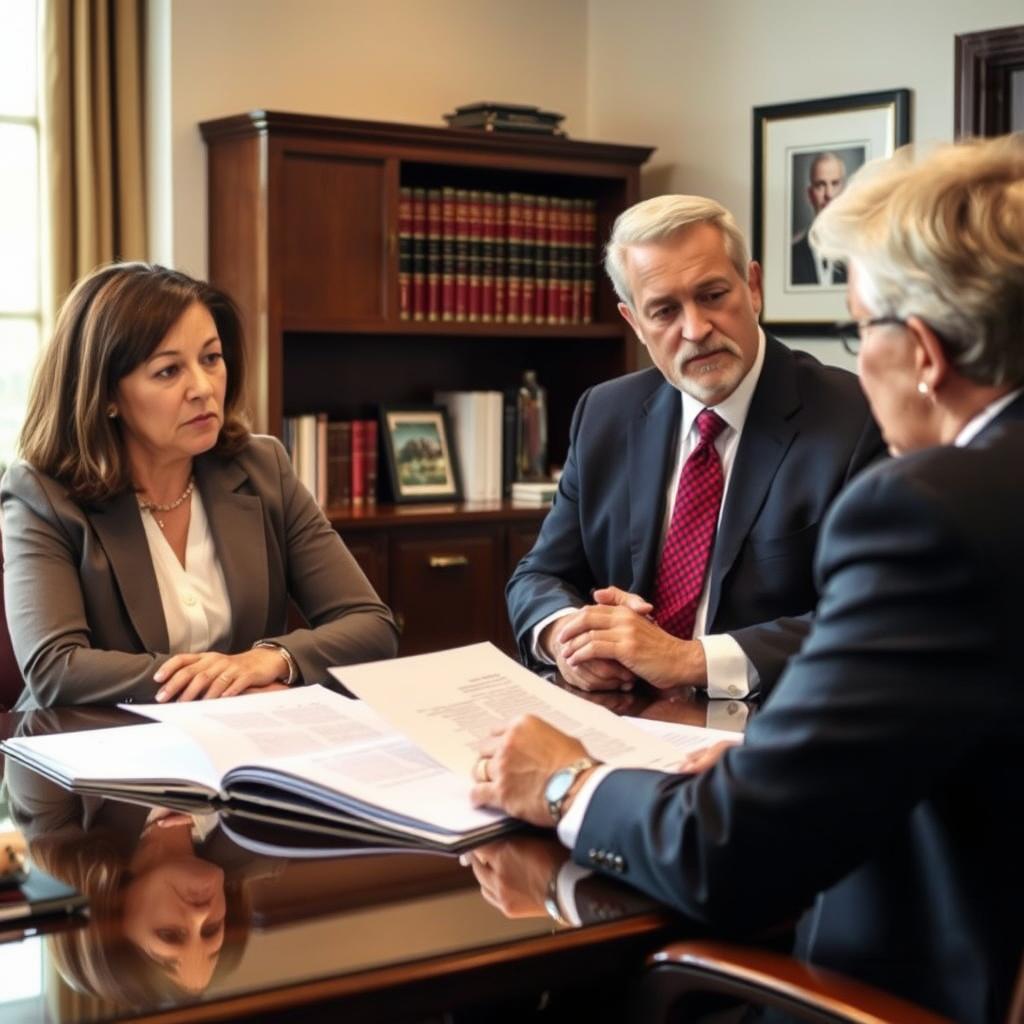
Rehabilitative Alimony Lawyer Prince William County, VA
Rehabilitative alimony is a form of spousal support designed to help a supported spouse gain the education, training, or work experience needed to become self‑supporting. In Prince William County, these determinations are made by the Circuit Court under Virginia’s equitable distribution framework. Mr. Sris and his Of Counsel at Law Offices Of SRIS, P.C. represent clients throughout the county — including Manassas, Woodbridge, Dale City, Dumfries, Gainesville, Haymarket, Lake Ridge, and Occoquan — from the firm’s Fairfax location. Whether you are seeking rehabilitative support after a divorce, responding to a request for alimony, or need to modify or enforce an existing order, an experienced family law attorney can help you present the facts the court needs to reach a fair result. Reach Law Offices Of SRIS, P.C. at (888) 437‑7747 to schedule a consultation. Law Offices Of SRIS, P.C. — Advocacy Without Borders.
What Rehabilitative Alimony Means in Prince William County
Virginia is an equitable distribution state, and spousal support — including rehabilitative alimony — is governed by The statute gives the court discretion to award support for a limited period to allow the recipient spouse to acquire the skills or credentials necessary to re‑enter the workforce or increase earning capacity. Unlike indefinite (permanent) support, rehabilitative alimony is expressly time‑limited; the court sets a duration based on a realistic plan for the recipient to become self‑sufficient.
In Prince William County, petitions for divorce and associated spousal support are heard in the Prince William County Circuit Court, part of the Thirty‑first Judicial District of Virginia. The Circuit Court, located at 9311 Lee Avenue in Manassas, considers the thirteen statutory factors outlined in § 20‑107.1 — including the length of the marriage, each spouse’s education and training, contributions to the family, the standard of living during the marriage, and the financial resources of each party. The court also weighs whether the spouse seeking support has made a good‑faith effort to obtain employment or training. The Juvenile and Domestic Relations District Court may address related custody and child support matters, but the Circuit Court retains jurisdiction over the divorce and any form of spousal support.
Prince William County’s family docket often involves parties who commute to Washington, D.C., or who work in Northern Virginia’s technology and government sectors. That economic context can influence both the need for rehabilitative support and the realistic timeline for re‑entry into the workforce. Mr. Sris and his Of Counsel are familiar with how local judges apply the statutory factors and can develop a presentation that fits the specific circumstances of your case.
How Mr. Sris and His Of Counsel Handle Rehabilitative Alimony Cases
At Law Offices Of SRIS, P.C., the approach to rehabilitative alimony begins with a thorough case evaluation. Mr. Sris and his Of Counsel review financial records, employment histories, educational backgrounds, and any existing separation or property settlement agreements. The goal is to identify the facts that will matter most to the court — the duration of the marriage, the recipient’s realistic employment prospects, the paying spouse’s ability to provide support, and the presence of any rehabilitative plan. Where the parties are in agreement on support terms, the firm works to craft a written agreement that meets the statutory requirements and is acceptable to the Prince William County Circuit Court.
When a contested hearing is necessary, Mr. Sris and his Of Counsel present evidence on each applicable factor under § 20‑107.1. This may include testimony about the job market in Northern Virginia, vocational evaluations, and demonstrations of attempts to find employment or training opportunities. Because rehabilitative alimony is inherently limited in duration, the evidence focuses on the specific steps the recipient intends to take and the time reasonably necessary to accomplish those steps. The firm also handles post‑divorce matters: petitions to modify rehabilitative support if circumstances change, or enforcement actions when support is not paid. Throughout the process, clients are kept informed of the court’s scheduling and any procedural requirements specific to Prince William County.
About Mr. Sris and His Of Counsel Team
Mr. Sris, Owner and Founder of Law Offices Of SRIS, P.C., has practiced law since 1997. He is a former prosecutor and is admitted in Virginia, Maryland, the District of Columbia, New Jersey, and New York. Mr. Sris testified before the Virginia House Courts of Justice Committee in support of 2019 HB 635 (chief patron Del. David Bulova), and his understanding of Virginia’s equitable distribution statute informs the firm’s approach to spousal support matters. Mr. Sris and his Of Counsel bring over 120 years of combined legal experience, with 4,739+ documented firm-wide results. Results may vary. In Prince William County, the firm has documented 297 favorable case results across all practice areas — a track record that reflects the thorough preparation and local court knowledge that Mr. Sris and his Of Counsel bring to each matter.
Frequently Asked Questions
What is rehabilitative alimony in Virginia?
Rehabilitative alimony is time‑limited spousal support ordered to help a recipient spouse obtain the education, training, or work experience needed to become self‑supporting. Under Va. Code § 20‑107.1, the court may set a specific duration based on a realistic plan for the recipient to increase earning capacity. Unlike permanent or indefinite support, rehabilitative alimony ends when the recipient has had a reasonable opportunity to become self‑sufficient.
How does the court decide whether to award rehabilitative alimony in Prince William County?
The Prince William County Circuit Court evaluates the thirteen factors listed in § 20‑107.1, including the length of the marriage, each spouse’s education and employment history, contributions to the family, the standard of living during the marriage, and the financial needs of the recipient. The court also examines whether the requesting spouse has made a good‑faith effort to pursue employment or training. The weight given to each factor depends on the particular facts of the case.
Can rehabilitative alimony be modified after a divorce?
Yes. Under Virginia law, an award of spousal support — including rehabilitative support — may be modified upon a showing of a material change in circumstances. A party seeking modification must file a motion with the Prince William County Circuit Court and present evidence of the changed circumstances. Common grounds for modification include a substantial change in income, involuntary job loss, or the recipient’s failure to make reasonable progress toward self‑sufficiency.
Do I need a lawyer for a rehabilitative alimony matter in Prince William County?
While you are not required to have an attorney, spousal support determinations involve detailed financial disclosures, statutory factors, and procedural rules that are specific to Virginia’s Circuit Courts. An experienced family law attorney can help you present the evidence the court needs and can identify issues such as the appropriate duration of support and the tax implications of different payment structures. Mr. Sris and his Of Counsel regularly appear in the Prince William County Circuit Court on behalf of clients seeking or contesting rehabilitative alimony.
What is the difference between rehabilitative alimony and permanent support in Virginia?
Rehabilitative alimony is awarded for a finite period to allow the recipient to become self‑supporting; it ends when the court‑ordered term expires. Permanent (or indefinite) support, on the other hand, continues without a fixed end date and is typically reserved for situations where a spouse cannot reasonably be expected to become self‑supporting due to age, health, or a long absence from the workforce. The Prince William County Circuit Court determines which type of support is appropriate based on the facts of each case.
How can I discuss my rehabilitative alimony case with an attorney?
To discuss your specific situation, reach Law Offices Of SRIS, P.C. at (888) 437‑7747. A member of the firm will answer your call and can help you schedule a consultation with Mr. Sris or one of his Of Counsel. Consultations are by appointment at the firm’s Fairfax location, which serves clients throughout Prince William County, including Manassas, Woodbridge, Dale City, and surrounding communities.
Virginia legal resources: Virginia Code Title 20 (Domestic Relations) · Virginia Courts
Attorney advertising. Prior results do not guarantee a similar outcome. Results may vary.
Case results depend on a variety of factors unique to each case.