
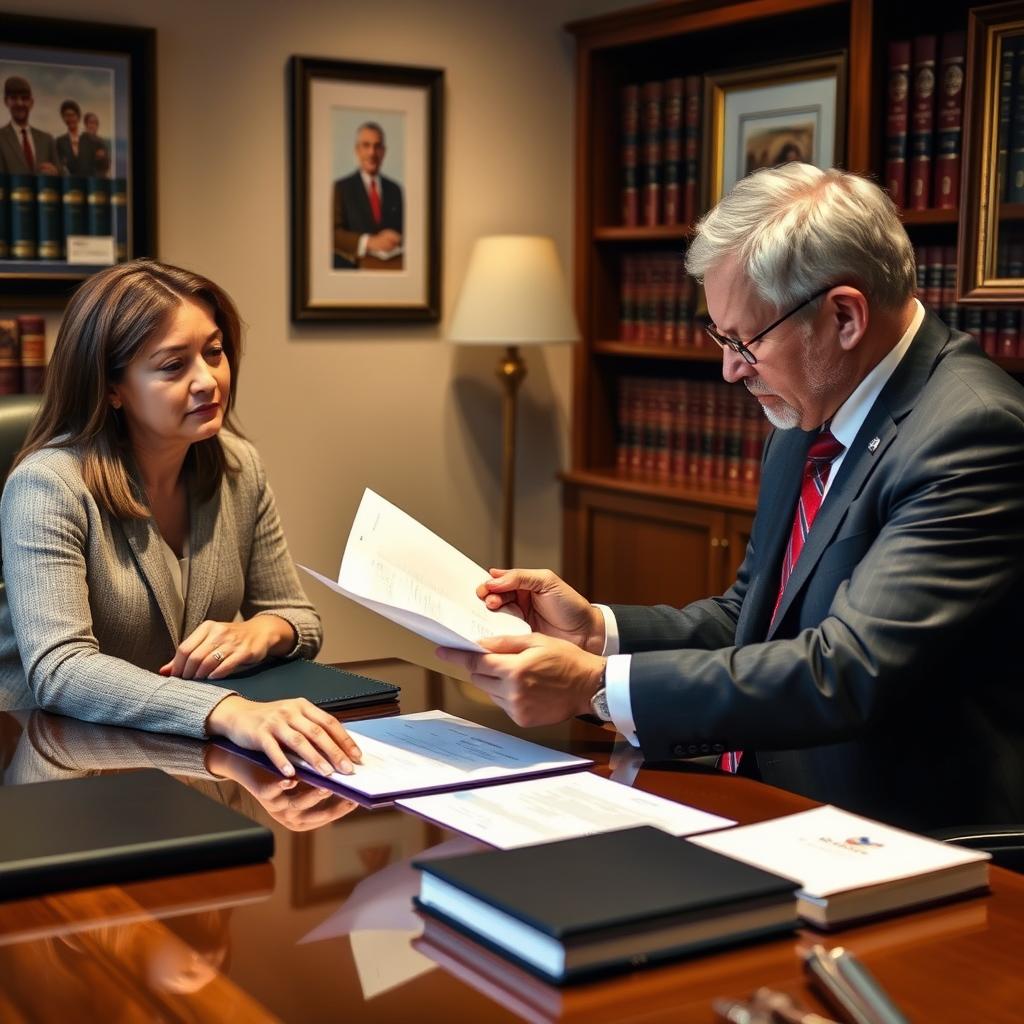
Marital Agreement Lawyer Fairfax County, VA
Planning for marriage involves more than choosing a venue — it means making decisions about property, finances, and future obligations. In Fairfax County, Virginia, a marital agreement allows couples to define their financial rights and responsibilities before or during marriage. Law Offices Of SRIS, P.C. represents clients throughout Fairfax County and the surrounding communities — including Fairfax, Burke, Centreville, Chantilly, Herndon, Reston, McLean, Vienna, Tysons, Oakton, Springfield, Annandale, and Falls Church — in the preparation, review, and enforcement of prenuptial and postnuptial agreements. Mr. Sris and his Of Counsel team draw on decades of combined experience in family law to craft agreements that are tailored to each client’s circumstances and designed to withstand judicial scrutiny under Virginia law. To discuss your situation, reach our location at (888) 437-7747. Law Offices Of SRIS, P.C. — Advocacy Without Borders.
What Marital Agreements Mean in Fairfax County, Virginia
In Virginia, marital agreements — both prenuptial (before marriage) and postnuptial (after marriage) — are governed primarily by the Premarital Agreement Act, Va. Code § 20‑147 et seq. These statutes permit parties to contract with respect to property rights, spousal support, and other financial matters, subject to certain safeguards that ensure the agreement is entered into voluntarily and with adequate financial disclosure. A marital agreement can define separate property, establish property division rules different from Virginia’s equitable distribution default, and address other economic issues that might arise during marriage or upon dissolution.
In Fairfax County, disputes involving the validity or enforcement of a marital agreement typically arise in the context of divorce or legal separation proceedings before the Fairfax County Circuit Court. The court evaluates whether the agreement was executed voluntarily, whether there was a fair and reasonable disclosure of assets and obligations, and whether enforcement would be unconscionable. Because the standards are fact‑intensive and subject to judicial interpretation, working with an attorney who understands both the applicable statutes and the local court’s expectations can be critical. Mr. Sris and his Of Counsel are familiar with the procedural and substantive aspects of marital agreement cases in the Nineteenth Judicial District.
How Mr. Sris and His Of Counsel Handle Marital Agreement Cases
At Law Offices Of SRIS, P.C., Mr. Sris and his Of Counsel take a thorough and client‑centered approach to marital agreements. The process begins with a detailed discussion of the client’s assets, debts, income, and long‑term goals. The attorneys then explain the legal requirements — including the need for full and fair disclosure under Virginia law — and draft an agreement that reflects the parties’ intentions while meeting statutory criteria. For clients who have been asked to sign an agreement prepared by the other party, the firm reviews the document for potential issues, advises on whether the terms are fair and enforceable, and, when necessary, negotiates modifications to protect the client’s interests.
In the event a marital agreement is challenged during a divorce or other family law proceeding, Mr. Sris and his Of Counsel represent clients in the Fairfax County Circuit Court. The team examines the circumstances surrounding the agreement’s execution, including whether there was any fraud, duress, or material nondisclosure, and advocates for the outcome that aligns with the client’s position. Because every situation is unique, the firm tailors its strategy to the specific facts and legal issues presented. Throughout the matter, clients are kept informed of developments and advised of their options at each stage.
About Mr. Sris and His Of Counsel Team
Mr. Sris, Owner and Founder of Law Offices Of SRIS, P.C., has been practicing law since 1997 and is admitted in Virginia, Maryland, the District of Columbia, New Jersey, and New York. He concentrates his practice in family law, among other areas, and has extensive experience guiding clients through complex financial issues in divorce and marital agreements. Mr. Sris testified before the Virginia House Courts of Justice Committee in support of 2019 HB 635 (chief patron Del. David Bulova).
Mr. Sris and his Of Counsel bring over 120 years of combined legal experience and have achieved 4,739+ documented firm-wide results. Results may vary. The team represents clients at our Fairfax location — 4008 Williamsburg Court, Fairfax, VA 22032 — by appointment only. Call (888) 437-7747 to schedule a consultation.
Frequently Asked Questions
What is a prenuptial agreement in Virginia?
A prenuptial agreement is a contract made between prospective spouses before marriage that addresses property rights, spousal support, and other financial matters. Under the Virginia Premarital Agreement Act (Va. Code § 20‑147 et seq.), such agreements are enforceable if they are entered into voluntarily and accompanied by a fair and reasonable disclosure of each party’s assets and obligations. A properly executed prenuptial agreement can provide certainty and reduce conflict in the event of divorce or death.
Can a postnuptial agreement be enforced in Virginia?
Yes. A postnuptial agreement — entered into after marriage — is subject to the same statutory framework as a prenuptial agreement. As with prenuptial agreements, the court will enforce a postnuptial agreement if it was made voluntarily, with adequate financial disclosure, and is not unconscionable. Such agreements are often used to resolve financial disputes that arise during the marriage or to address changed circumstances.
What are the requirements for a valid marital agreement under Virginia law?
To be valid and enforceable, a marital agreement must be in writing and signed by both parties. The agreement must be entered into voluntarily, and the execution must be free from fraud, duress, or undue influence. Each party must provide a fair and reasonable disclosure of their property and financial obligations, or the party against whom enforcement is sought must have had — or reasonably could have had — adequate knowledge of the other’s assets. The court examines these factors when a dispute arises.
Do I need a lawyer for a marital agreement in Fairfax County?
While Virginia law does not require each party to have a separate lawyer to enter into a marital agreement, having independent legal counsel is strongly advisable. An attorney can explain the legal consequences of the agreement, ensure that the document meets statutory requirements, and identify provisions that may be unfavorable or unenforceable. Mr. Sris and his Of Counsel provide representation to individuals who wish to draft a new agreement or review one presented by a spouse‑to‑be or current spouse.
What happens if a marital agreement is challenged during a divorce?
If a party challenges the validity of a marital agreement in a Fairfax County divorce proceeding, the Circuit Court will hold a hearing to determine whether the agreement meets the requirements of Va. Code § 20‑147 et seq. The party seeking to avoid enforcement bears the burden of proving that the agreement was not entered into voluntarily or that disclosure was inadequate. The court’s ruling can significantly affect property division, spousal support, and other financial outcomes, which is why experienced legal representation is important from the outset.
How does a marital agreement affect property division in a Virginia divorce?
A valid marital agreement overrides Virginia’s default equitable distribution rules. It can designate certain assets as separate property, establish distribution percentages for marital property, and even waive or limit spousal support. Fairfax County Circuit Court, which has exclusive jurisdiction over divorce, will honor the terms of a properly executed marital agreement unless it finds a basis to set the agreement aside. This makes careful drafting and full disclosure particularly important.
Family law representation in Prince William County ·
Stafford County family law attorneys ·
Fauquier County family law counsel ·
Loudoun County family law services ·
Arlington County family law representation
Primary sources:
Virginia Code Title 20 — Domestic Relations ·
Virginia Judicial System
Attorney advertising. Prior results do not guarantee a similar outcome.
Results may vary.
Case results depend on a variety of factors unique to each case.