
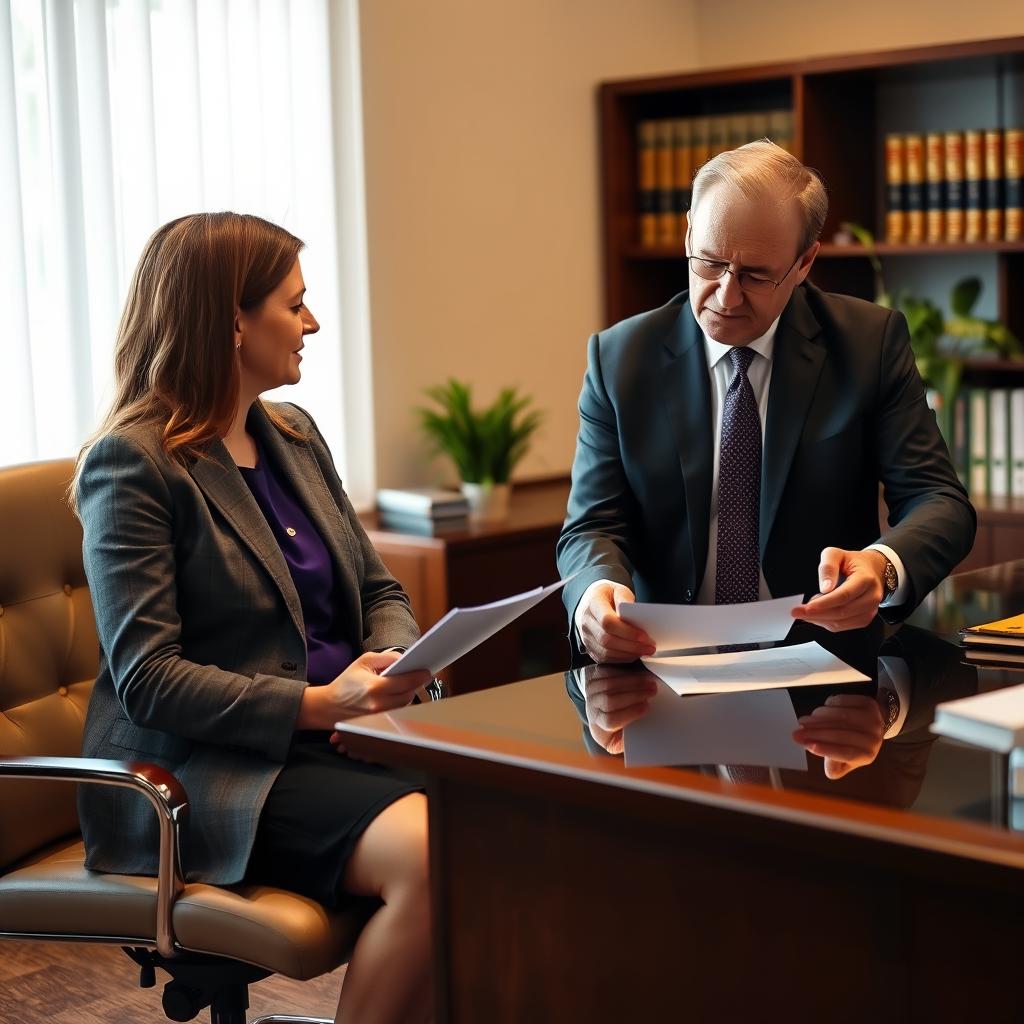
Partner Support Lawyer Near Me
If you are searching for a Partner Support Lawyer Near Me in Arlington, Virginia, Law Offices Of SRIS, P.C. can provide legal guidance on spousal support (often called alimony) in Northern Virginia. Spousal support matters arise when one spouse may need financial assistance from the other during or after a divorce. Virginia courts evaluate support claims under Va. Code § 20-107.1, which lists thirteen statutory factors — including the duration of the marriage, the standard of living established during the marriage, and the earning capacity of each party. Because support determinations are fact‑specific and courts have considerable discretion, a well‑prepared presentation of the facts can influence the outcome. Mr. Sris, Owner and Founder of Law Offices Of SRIS, P.C., along with his Of Counsel team, concentrates in family law matters and has handled spousal support disputes for clients across Virginia. To request a consultation, reach our Arlington location at (703) 589‑9250 or call toll‑free (888) 437‑7747.
Law Offices Of SRIS, P.C. – Advocacy Without Borders.
What Partner Support Means in Arlington, Virginia
Partner support, known in Virginia as spousal support or alimony, is a financial obligation that one spouse may be ordered to pay to the other after separation or divorce. Virginia is an equitable distribution state, meaning that marital property is divided fairly but not necessarily equally. Spousal support is a separate remedy that addresses the financial need of a spouse who may lack sufficient income or assets to maintain the standard of living established during the marriage. In Arlington, support petitions are heard in the Arlington Circuit Court, located at 1425 North Courthouse Road, Arlington, VA 22201, which has exclusive jurisdiction over divorce and related financial matters. Temporary support may also be addressed earlier in the proceeding.
Virginia law provides for several types of support: pendente lite support during the divorce, rehabilitative support for a limited time, and permanent support in long‑term marriages. The court weighs the statutory factors without a rigid formula; thus, each partner support case is unique. In Arlington, the local court practices require a clear evidentiary presentation, and the involvement of an experienced family law practitioner can help ensure that the relevant financial circumstances are properly documented. Mr. Sris and his Of Counsel team are familiar with the Arlington Circuit Court and understand how to present spousal support claims in a manner that addresses the court’s expectations.
How Mr. Sris and His Of Counsel Handle Partner Support Cases
When a client consults with Law Offices Of SRIS, P.C. about partner support, the process begins with a thorough review of the financial picture — including income, earning capacity, assets, debts, and the marital standard of living. Mr. Sris and his Of Counsel work to identify the spouse’s actual needs and the other spouse’s ability to pay, guided by the thirteen factors in Va. Code § 20-107.1. If a settlement is feasible, the firm negotiates a comprehensive agreement that addresses the amount, duration, and modifiability of support. When settlement is not achievable, the matter proceeds to a hearing before the judge, where the firm presents the financial evidence and arguments in favor of an appropriate support order.
Modification of an existing spousal support order is also a significant part of the firm’s practice. A substantial change in circumstances — such as a job loss, a significant increase or decrease in income, or a post‑divorce change in health — may justify a modification. Mr. Sris and his Of Counsel help clients determine whether the change meets the legal threshold and, if so, prepare a motion for modification in the Arlington Circuit Court. Throughout the process, the firm emphasizes a straightforward approach, avoiding unrealistic promises, and keeping the client informed of each step.
About Mr. Sris and His Of Counsel Team
Mr. Sris, Owner and Founder of Law Offices Of SRIS, P.C., has been practicing since 1997. He is admitted in Virginia, Maryland, the District of Columbia, New Jersey, and New York. His background includes experience as a former prosecutor, which provides insight into how cross‑examination works and how financial evidence is tested in court. Mr. Sris testified before the Virginia House Courts of Justice Committee in support of 2019 HB 635 (chief patron Del. David Bulova), the bill that became the 2019 revision to Va. Code § 20-107.3(g). In partner support matters, Mr. Sris draws on his extensive experience in family law to present a clear financial picture to the court. He works collaboratively with his Of Counsel team, every member of which has over a decade of practice experience. Collectively, Mr. Sris and his Of Counsel bring over 120 years of combined legal experience and have achieved over 4,739+ documented firm-wide results. Results may vary.
Frequently Asked Questions
What is partner support in Virginia?
Partner support, also called spousal support or alimony, is a court‑ordered payment from one spouse to the other after separation or divorce. Under Va. Code § 20-107.1, the court considers factors such as the duration of the marriage, each party’s earning capacity, and the marital standard of living. The amount and duration are decided on a case‑by‑case basis without a fixed calculator. For guidance on your particular circumstances, reach Law Offices Of SRIS, P.C. at (888) 437-7747.
How does a Virginia court decide how much partner support to award?
Virginia courts use thirteen statutory factors to determine spousal support. These include each spouse’s age, health, education, employment history, contributions to the family, and the marital lifestyle. There is no strict formula, and the judge has broad discretion. An attorney can help present the financial evidence in a way that aligns with these factors. To discuss your matter, contact Law Offices Of SRIS, P.C. at (888) 437-7747.
Can partner support be modified after the divorce?
Yes, spousal support orders can be modified if there is a material change in circumstances that was not anticipated at the time of the original order. Examples include involuntary job loss, a significant increase in earnings, or illness. The party seeking modification must file a motion in the circuit court that issued the order. For a consultation, reach Mr. Sris and his Of Counsel at (888) 437-7747.
Do I need a lawyer for a partner support case in Arlington?
While you are not legally required to hire a lawyer, spousal support disputes can involve complex financial issues, tax implications, and evidentiary requirements. A lawyer can help you gather the necessary documentation, negotiate a settlement, or present your case in the Arlington Circuit Court. Contact Law Offices Of SRIS, P.C. at (888) 437-7747 to request a consultation.
How long does a partner support case take in Arlington?
The timeline for a spousal support matter depends on whether the support is settled out of court or requires a hearing. Temporary support during a divorce may be addressed more quickly. A contested modification hearing can take several months, depending on the court’s calendar. For guidance on procedural timing in your case, reach our location at (703) 589‑9250.
What should I bring to a consultation about partner support?
To make the most of your initial consultation, bring recent pay stubs, tax returns, bank statements, a list of monthly expenses, and any existing separation or prenuptial agreements. Documents showing each spouse’s income and the marital standard of living are especially useful. To schedule an appointment, call Law Offices Of SRIS, P.C. at (888) 437-7747.
Additional resources:
• Family law representation in Arlington, VA
• Arlington divorce lawyer
• Child support lawyer in Arlington
Official sources:
Virginia Code Title 20 (Domestic Relations) |
Virginia Courts |
Virginia State Bar
Attorney advertising. Prior results do not guarantee a similar outcome. Results may vary.
Case results depend on a variety of factors unique to each case.