
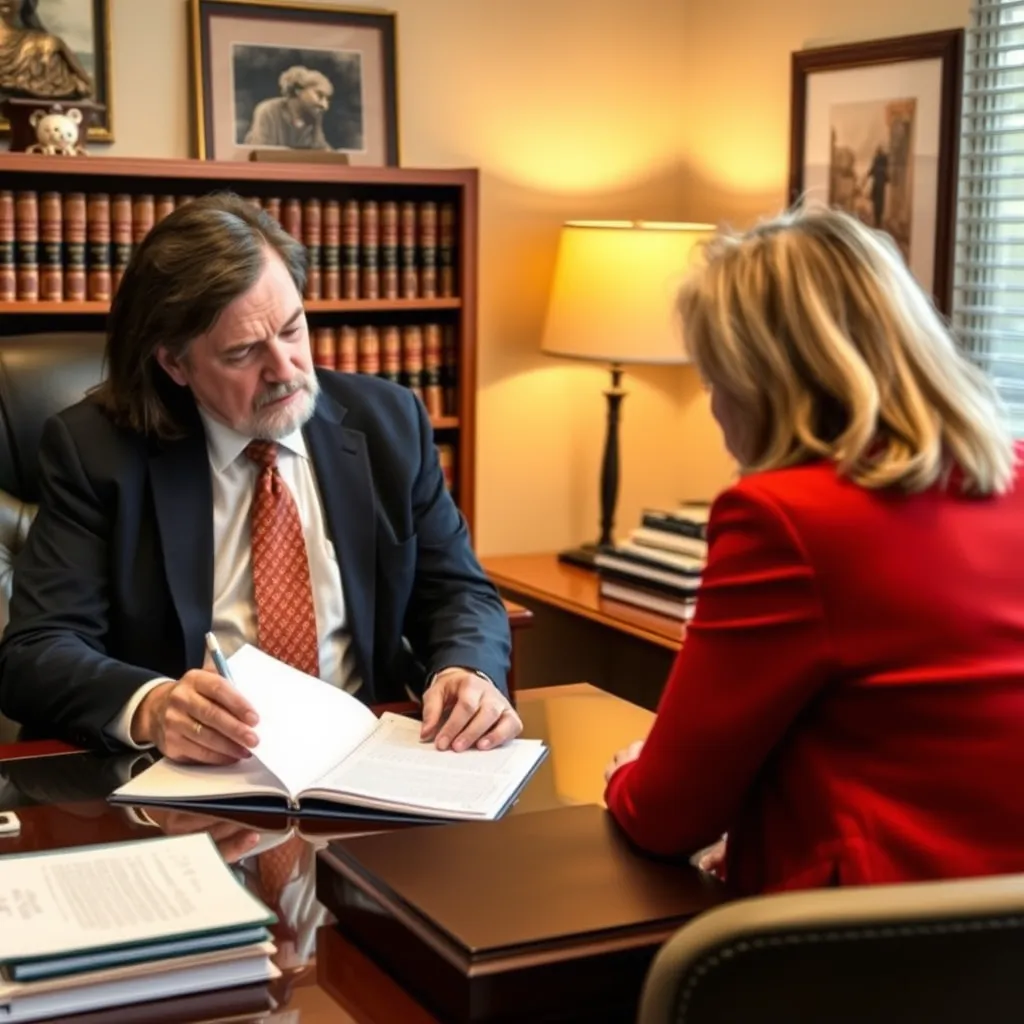
Alimony Contempt Lawyer Manassas, VA
You were ordered by a Manassas court to pay alimony to your former spouse. Now, because of a job loss, medical bills, or simply a misunderstanding about the payment terms, you’ve fallen behind. The recipient has filed a contempt petition, and a hearing has been set before the Manassas General District Court. You’re worried about going to jail, losing your driver’s license, or facing a judgment you cannot afford. An alimony contempt charge in Virginia is a serious matter — but you have defenses, and you do not have to face it alone. Law Offices Of SRIS, P.C. represents individuals in Manassas and throughout Prince William County who are facing alimony contempt proceedings. Call (888) 437-7747 to request a consultation with a Manassas alimony contempt lawyer who understands how to protect your rights. Law Offices Of SRIS, P.C. — Advocacy Without Borders.
Defending Against Alimony Contempt Allegations
When a former spouse claims you have willfully violated an alimony order, the stakes are high. The court can impose remedial sanctions — such as ordering you to pay the arrears, post a bond, or even incarcerate you until you comply. The central question is whether your failure to pay was willful. If you can show that you lacked the ability to pay because of circumstances beyond your control, you may have a complete defense. Virginia law treats inability to pay as a legitimate argument against a finding of contempt. Mr. Sris and his Of Counsel examine your financial records, employment history, and any changes that occurred after the alimony order was entered. They look for evidence that you made good-faith efforts to comply, that you communicated your financial hardship to the other party, or that the alleged arrears are miscalculated.
In many cases, what looks like a straightforward contempt charge can be resolved through negotiation. A lawyer can work with the opposing party to establish a payment plan, modify the underlying alimony order to reflect your current income, or seek a suspension of sanctions while a modification petition is pending. The goal is to get you out of the contempt hearing with your freedom and your finances intact. Because Manassas courts are served from our Fairfax Location — just a short drive from I‑66 and Route 28 — Mr. Sris and his Of Counsel are readily available to represent you at every stage of the proceeding.
What to Expect in a Manassas Alimony Contempt Proceeding
The process typically begins when the payee spouse files a petition for a rule to show cause in the Manassas General District Court or the Manassas Circuit Court, depending on where the original alimony order was entered. You will be served with a summons that sets a hearing date. At the hearing, the person alleging contempt must prove by clear and convincing evidence that you had the ability to pay but willfully refused. You have the right to present witnesses, introduce financial documents, and cross-examine the accuser. The judge will hear both sides and then decide whether contempt occurred and what sanctions to impose.
Because these hearings move quickly, you need to be prepared. Your attorney can gather pay stubs, tax returns, bank statements, and medical records that demonstrate your inability to pay. They can also argue that the alimony order itself is ambiguous, that the arrearage calculation is wrong, or that the parties had an informal agreement to modify payments. If the court finds you in contempt, it may give you an opportunity to purge the contempt — for instance, by making a lump-sum payment — before invoking jail time. The Manassas courthouse at 9311 Lee Avenue, Suite 230, is where these matters are heard, and Law Offices Of SRIS, P.C. Makes regular appearances there for family law clients.
Potential Consequences of Alimony Contempt in Virginia
Virginia courts have broad discretion to enforce alimony orders. Under Va. Code § 20‑107.1, a judge may use coercive measures to secure compliance. For civil contempt, the court can order you to pay a fine, require you to post a bond, seize a portion of your wages through a garnishment, or — in the most serious cases — commit you to jail until you satisfy the arrears. The jail sanction is not punitive; it is designed to compel you to do what the court has ordered. Once you pay, you are released. Criminal contempt, which applies when the violation is directed at the dignity of the court, can result in a fixed jail sentence and a fine. In practice, most alimony contempt cases are treated as civil contempt, and a well-prepared defense can often avoid incarceration altogether.
Other repercussions can include a judgment for the arrears that accrues interest, a lien on your property, and a negative impact on your credit. A contempt finding may also influence any pending custody or support modification requests, because it paints you as someone who does not follow court orders. That is why it is critical to address a contempt petition head-on, with an experienced lawyer who can put the full picture before the court. Mr. Sris and his Of Counsel work to present your side of the story clearly and persuasively, seeking outcomes that keep you out of jail and protect your ability to move forward.
Your Defense Team: Mr. Sris and His Of Counsel
Mr. Sris, Owner and Founder of Law Offices Of SRIS, P.C., has practiced law since 1997. A former prosecutor, he understands how to challenge evidence, cross-examine witnesses, and build a coherent narrative in court. He is admitted to practice in Virginia, Maryland, the District of Columbia, New Jersey, and New York. Mr. Sris testified before the Virginia House Courts of Justice Committee in support of 2019 HB 635 (chief patron Del. David Bulova). Over 120 years of combined legal experience between Mr. Sris and his Of Counsel, along with 4,739+ documented firm-wide results, are brought to bear on every case. Results may vary.
Mr. Sris is supported by a team of Of Counsel attorneys — experienced practitioners who are engaged through Excella. Each Of Counsel brings focused knowledge to family law matters, including divorce, alimony, equitable distribution, and contempt proceedings. Together, Mr. Sris and his Of Counsel work collaboratively to examine the financial evidence, identify procedural weaknesses, and present a strong defense in Manassas courts. They serve clients throughout Prince William County, Manassas, and the surrounding Northern Virginia communities from their Fairfax Location at 4008 Williamsburg Court, Fairfax, VA 22032. By appointment only; call (888) 437-7747 to schedule.
Frequently Asked Questions — Alimony Contempt in Manassas
What must the other side prove to establish alimony contempt?
The moving party must show, by clear and convincing evidence, that a valid court order existed, that you knew about it, and that you willfully disobeyed it despite having the ability to comply. If you can demonstrate an inability to pay, or that you made reasonable good-faith efforts to comply, the contempt charge may fail.
Can I go to jail if I cannot pay alimony?
Virginia courts may jail a person for civil contempt only if the court finds that the person has the present ability to pay but refuses to do so. If you truly lack the financial resources, jail is an unlikely outcome. However, the burden is on you to prove your inability to pay through credible financial documentation.
What is the difference between civil and criminal contempt in an alimony case?
Civil contempt is remedial — it is designed to compel you to pay the alimony you owe. Once you comply, you are released from any sanction. Criminal contempt is punitive, punishing past conduct that offended the court, and can include a fixed jail sentence and fine. Most alimony contempt actions are civil.
How can a lawyer help me fight an alimony contempt charge?
A lawyer can help you gather the financial records that show your inability to pay, negotiate a resolution with the other party, argue for a modification of the underlying alimony order, and advocate for a purge clause that lets you avoid jail. Having an attorney by your side also ensures your procedural rights are protected during the hearing.
What happens if I ignore the contempt petition?
Ignoring a rule to show cause can lead to a default finding of contempt, meaning the court may issue a bench warrant for your arrest. You should always respond to the summons, appear at the hearing, and seek legal counsel promptly.
Can the alimony order be modified if I cannot pay it?
Yes. If you have experienced a material change in circumstances — such as a significant drop in income, a serious illness, or a job loss — you can petition the court to modify the alimony amount. A modification petition can often be filed alongside your defense in a contempt proceeding.
Will my driver’s license be suspended if I am in contempt?
Virginia law allows the court to suspend a person’s driver’s license for willful failure to pay support obligations. However, this is not automatic, and an attorney can argue against it, especially if you rely on your license for employment.
Should I represent myself in an alimony contempt hearing?
You have the right to represent yourself, but alimony contempt proceedings involve complex evidentiary rules, procedural deadlines, and the possibility of jail time. An experienced attorney can present your case in the strongest possible light and help you avoid mistakes that could lead to an unfavorable outcome.
Contact Law Offices Of SRIS, P.C. at (888) 437-7747 to request a consultation about your alimony contempt matter in Manassas. Our Fairfax Location serves clients throughout Prince William County, and we can appear with you in the Manassas courthouse at 9311 Lee Avenue. Learn more about our family law practice.
Law Offices Of SRIS, P.C.
Fairfax Location — 4008 Williamsburg Court, Fairfax, VA 22032
By appointment only. Call (888) 437-7747 to schedule.
Attorney advertising. Prior results do not guarantee a similar outcome.
Results may vary.
Case results depend on a variety of factors unique to each case.