
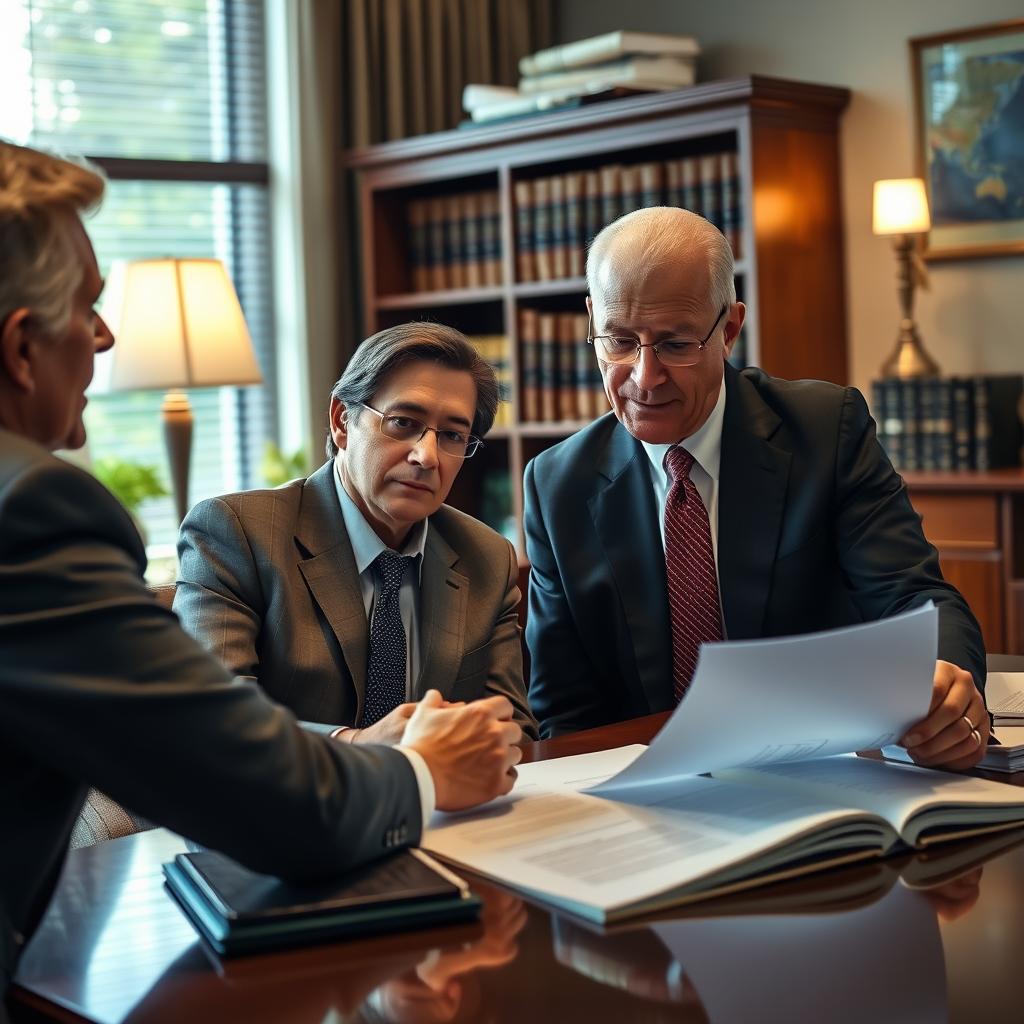
Norfolk Military Divorce Lawyer Fairfax
You need a Norfolk Military Divorce Lawyer Fairfax to handle the specific legal challenges of a military divorce in Virginia. Law Offices Of SRIS, P.C. —Advocacy Without Borders. Military divorces involve federal laws like the SCRA and USFSPA alongside Virginia statutes. Jurisdiction, pension division, and child custody across deployments require precise legal strategy. SRIS, P.C. (Confirmed by SRIS, P.C.)
Statutory Definition of Military Divorce in Virginia
Virginia military divorce is governed by the Virginia Uniformed Services Former Spouses’ Protection Act (USFSPA), Va. Code § 20-107.3, which authorizes state courts to treat military retired pay as marital property subject to division. The core legal framework for a Norfolk Military Divorce Lawyer Fairfax to handle combines federal statutes like the Servicemembers Civil Relief Act (SCRA) with Virginia divorce law under Title 20. Virginia courts have specific jurisdiction rules for service members stationed in or domiciled in the Commonwealth. The maximum penalty in a divorce is not a criminal fine but the financial and custodial terms of the final decree, which are permanent.
A Norfolk Military Divorce Lawyer Fairfax must understand how federal law preempts and interacts with Virginia code. The SCRA provides protections against default judgments for deployed personnel. The USFSPA allows direct payment of retired pay via the Defense Finance and Accounting Service (DFAS) under a court order. Virginia law defines marital property and sets guidelines for spousal support and child custody. Jurisdiction is the first major hurdle in any military divorce case in Fairfax.
How is jurisdiction determined for a military divorce in Fairfax?
Jurisdiction requires the service member to be a legal resident of Virginia or stationed in Virginia for at least six months. Filing occurs in the Circuit Court where the plaintiff resides or where the defendant is stationed. A service member can contest jurisdiction if they claim domicile in another state. Establishing Virginia jurisdiction is critical for the court to issue binding orders on pension division and support.
How is military pension divided in a Virginia divorce?
Military pension division follows the “marital share” formula based on the service member’s rank and time in service during the marriage. The court can award up to 50% of the disposable retired pay to the former spouse. The DFAS requires a court order meeting specific format requirements for direct payment. A Norfolk Military Divorce Lawyer Fairfax must draft the Qualified Domestic Relations Order (QDRO) correctly to ensure enforcement.
What is the impact of the 10/10 rule on military divorce?
The 10/10 rule is a DFAS administrative rule for direct payment of retired pay, not a legal entitlement. It requires ten years of marriage overlapping ten years of creditable service. If the 10/10 rule is not met, the former spouse must collect their share directly from the service member. This rule does not affect the court’s authority to divide the pension as marital property in Virginia.
The Insider Procedural Edge in Fairfax Circuit Court
Your case will be heard at the Fairfax County Circuit Court located at 4110 Chain Bridge Rd, Fairfax, VA 22030. This court handles all contested divorce and equitable distribution matters for military families in the area. Procedural specifics for Fairfax are reviewed during a Consultation by appointment at our Fairfax Location. The court follows Virginia Supreme Court rules for filing and serving divorce complaints on active-duty members. Expect a detailed procedural timeline from filing to final hearing. Learn more about Virginia family law services.
The filing fee for a divorce complaint in Fairfax Circuit Court is set by Virginia statute. Additional fees apply for serving papers, motions, and final decree entry. The court’s family law division has specific local rules regarding financial disclosures and custody evaluations. Military deployment can trigger SCRA stays, potentially extending the case timeline. A Norfolk Military Divorce Lawyer Fairfax knows how to manage these delays effectively.
The legal process in Fairfax follows specific procedural requirements that affect case timelines and outcomes. Courts in this jurisdiction apply local rules that may differ from neighboring areas. An attorney familiar with Fairfax court procedures can identify procedural advantages relevant to your situation.
What is the typical timeline for a military divorce in Fairfax?
A contested military divorce in Fairfax can take nine months to over a year to finalize. The timeline depends on case complexity, deployment schedules, and court docket availability. An uncontested divorce with a separation agreement may resolve in a few months. The mandatory separation period in Virginia is six months with a separation agreement or one year without.
What are the key filing requirements in Fairfax Circuit Court?
You must file a Complaint for Divorce, a Civil Cover Sheet, and a Military Affidavit if applicable. Financial statements and a proposed parenting plan are required if children or support are involved. Proper service on a deployed service member requires compliance with SCRA mailing and time extension rules. Failure to follow these rules can result in dismissal or reversal of the decree.
Penalties & Defense Strategies in Military Divorce
The most common penalty range in a military divorce involves the division of assets, award of spousal support, and establishment of child custody and support orders. These are not criminal penalties but court-enforced financial and parental obligations. The table below outlines potential outcomes. Learn more about criminal defense representation.
Virginia law establishes specific statutory frameworks that govern these matters. Each case involves unique factual circumstances that require careful legal analysis. SRIS, P.C. attorneys evaluate every relevant factor when developing case strategy for clients in Fairfax.
| Offense / Issue | Penalty / Outcome | Notes |
|---|---|---|
| Failure to Disclose Assets | Contempt of Court, Fines, Attorney Fees | Court can award a larger share to the other spouse. |
| Violation of Child Custody Order | Contempt, Modification of Custody, Fines | Military deployment schedules must be accounted for in the order. |
| Non-Payment of Child Support | Wage Garnishment, License Suspension, Contempt | Military pay is subject to garnishment under federal and state law. |
| Ignoring SCRA Protections | Default Judgment Overturned, Case Delays | Proper procedure protects the deployed member’s rights. |
[Insider Insight] Fairfax County prosecutors and judges in family law matters are accustomed to complex military asset division. They expect precise documentation of military benefits, including TSP accounts, SBP elections, and VA disability pay. Disability pay is generally not divisible, but its receipt can offset other marital asset awards. Local trends show a focus on creating custody plans that accommodate PCS moves and deployment cycles.
How can a service member protect their career during divorce?
A service member must avoid any conduct that could lead to a civilian protective order impacting security clearance. They should communicate with their chain of command as required. Legal assistance from a JAG officer can be sought, but JAG cannot represent them in civilian court against their spouse. A Norfolk Military Divorce Lawyer Fairfax provides civilian court defense and strategy.
What are defenses against unfair spousal support claims?
Defenses include demonstrating the spouse’s earning capacity, the duration of the marriage, and the standard of living established. Military bonuses and BAH are considered income for support calculations. The court examines the need of one party and the ability of the other to pay. A detailed financial analysis is the foundation of a strong defense.
Court procedures in Fairfax require proper documentation and adherence to filing deadlines. Missing a deadline or submitting incomplete filings can negatively impact case outcomes. Working with an attorney who handles cases in Fairfax courts regularly ensures that procedural requirements are met correctly and on time. Learn more about personal injury claims.
Why Hire SRIS, P.C. for Your Military Divorce in Fairfax
Our lead attorney for military family law in Virginia is a seasoned litigator with direct experience in Fairfax Circuit Court. SRIS, P.C. attorneys understand the intersection of military regulations and Virginia divorce law.
Attorney Profile: Our Virginia family law team includes attorneys with backgrounds handling complex asset division. They are familiar with DFAS requirements and drafting military pension division orders. The firm’s approach is direct and strategic, focused on protecting client interests in and out of court.
The timeline for resolving legal matters in Fairfax depends on multiple factors including case type, court scheduling, and the positions of all parties involved. SRIS, P.C. keeps clients informed throughout the process and works to move cases forward as efficiently as possible.
SRIS, P.C. has a Location in Fairfax to serve clients throughout Northern Virginia. The firm’s case management system tracks critical deadlines for SCRA stays and court filings. We prepare clients for every hearing and negotiation session. Your case is handled with the precision required for military benefits and custody issues.
Localized FAQs for Military Divorce in Fairfax
Can I file for divorce in Fairfax if my spouse is deployed?
Yes, but you must comply with SCRA service requirements. This includes filing a military affidavit and potentially extending response times. The Fairfax Circuit Court will not grant a default judgment without proof of proper service. Procedural specifics are reviewed during a Consultation by appointment. Learn more about our experienced legal team.
How is BAH (Basic Allowance for Housing) treated in a divorce?
BAH is considered income for calculating child support and spousal support in Virginia. It is not treated as marital property to be divided. The amount is based on the service member’s duty station, rank, and dependency status. Support calculations use gross income including all military allowances.
What happens to military medical benefits after divorce?
The former spouse may retain TRICARE coverage under the 20/20/20 rule (20 years marriage, 20 years service, 20 years overlap). If not eligible, they may purchase Continued Health Care Benefit Program (CHCBP) coverage. Eligibility is determined by DFAS, not the Virginia court. The divorce decree should address benefit certification.
Can child custody orders accommodate a PCS (Permanent Change of Station) move?
Yes, a well-drafted parenting plan can include provisions for long-distance visitation and virtual access. Virginia courts consider the best interests of the child, including maintaining a relationship with both parents. The plan may outline holiday schedules, summer visitation, and travel cost sharing. Modification may be needed after a PCS.
Financial implications are often a significant concern in legal proceedings. Virginia courts consider relevant financial factors when making determinations. Proper preparation of financial documentation strengthens your position and supports favorable outcomes in Fairfax courts.
Is VA disability pay divisible in a Virginia divorce?
No, federal law prohibits the division of VA disability pay as marital property. However, its receipt can be considered by the court as a factor in awarding spousal support or dividing other assets. The disability pay offsets the gross retired pay amount for DFAS calculation purposes. This requires careful financial analysis.
Proximity, CTA & Disclaimer
Our Fairfax Location is centrally positioned to serve clients at the Fairfax County Circuit Court and surrounding military communities. Consultation by appointment. Call 703-636-5417. 24/7.
Law Offices Of SRIS, P.C.—Advocacy Without Borders. SRIS, P.C. has a Location in Fairfax, Virginia. Our legal team is available to discuss your military divorce case. We provide representation for service members and spouses facing family law matters in Virginia.
Past results do not predict future outcomes.