
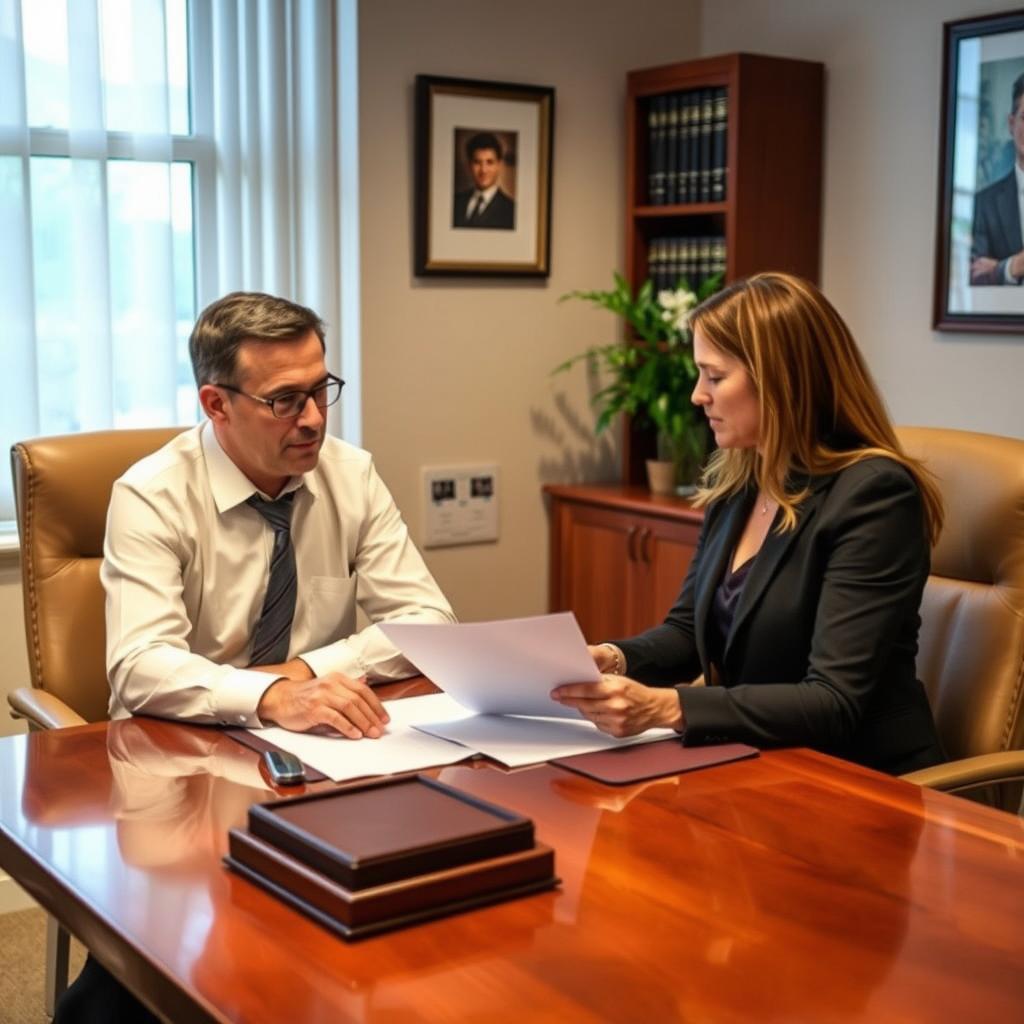
Felony Conviction Divorce Lawyer Falls Church
A felony conviction complicates every part of a divorce in Falls Church. You need a Felony Conviction Divorce Lawyer Falls Church who knows Virginia law and local court procedures. Law Offices Of SRIS, P.C.—Advocacy Without Borders. Our attorneys handle custody, property division, and support issues impacted by a criminal record. We build a strategy to protect your parental rights and financial interests. (Confirmed by SRIS, P.C.)
Statutory Definition of Divorce Grounds and Felony Impact
Virginia Code § 20-91(A)(3) defines felony conviction as a fault-based ground for divorce—Class 4 misdemeanor equivalent for procedural purposes with no direct criminal penalty. A felony conviction directly impacts divorce proceedings under Virginia law, particularly for custody and equitable distribution. The court must consider the conviction’s nature and circumstances when determining the child’s best interests. This statutory framework gives judges in Falls Church broad discretion to weigh the conviction’s effect on parenting and marital assets.
Virginia divorce law operates on a mix of fault and no-fault grounds. A felony conviction is a specific fault ground. It requires proof of a final conviction and a sentence of confinement for more than one year. The sentence must have been served, or the spouse must have been discharged from probation or parole. This ground is absolute if proven. It does not require a separation period like a no-fault divorce. The conviction’s existence can accelerate the divorce timeline. It also influences related matters like spousal support and property division. The court’s perception of the convicted spouse’s character is a critical factor.
A felony conviction can be used as grounds for divorce immediately upon final sentencing.
You can file for divorce based on a felony conviction once the sentence is final. No waiting period is required as with no-fault grounds. The filing must include certified documentation of the conviction and sentence. This documentation is a prerequisite for the court in Falls Church to accept the pleading.
Virginia law requires the convicted spouse to have served at least one year in confinement.
The statutory requirement is specific. The convicted spouse must have been sentenced to confinement for more than one year. They must have actually served that time or been discharged from supervision. Probation alone does not satisfy this ground for divorce. This detail is often contested in Falls Church divorce cases.
The conviction must be for a crime classified as a felony under Virginia or federal law.
Misdemeanors and lesser offenses do not qualify. The crime must carry a potential punishment of more than one year in prison. Out-of-state felony convictions may also be recognized if they meet Virginia’s equivalency standards. This determination requires legal analysis by a Virginia family law attorney.
The Insider Procedural Edge in Falls Church Courts
The Falls Church General District Court and Juvenile and Domestic Relations District Court handle divorce filings at 300 Park Avenue, Falls Church, VA 22046. Knowing the exact courtroom and local rules is essential for a case involving a felony. The Falls Church court docket moves quickly. Judges expect precise, timely filings. Any procedural error can delay your case for months. Filing fees for a divorce complaint in Virginia are approximately $89, but costs increase with motions and hearings. A felony conviction adds layers of required documentation and potential evidentiary hearings.
Procedural specifics for Falls Church are reviewed during a Consultation by appointment at our Falls Church Location. The court’s schedule for uncontested versus contested divorces differs significantly. A contested divorce with a felony ground will involve discovery and possibly a trial. Local rules mandate specific formats for filing financial statements and parenting plans. Failure to comply results in continuances. The court clerk’s Location is particular about document formatting. Serving the divorce papers on an incarcerated spouse requires strict adherence to Virginia Code § 8.01-296. This often necessitates a special process server.
File initial pleadings at the Falls Church General District Court clerk’s Location.
The correct venue is typically where the parties last resided together or where the defendant resides. For an incarcerated spouse, special venue rules apply. Filing in the wrong court results in dismissal and refiling costs.
Expect a longer timeline for a contested divorce based on felony grounds.
An uncontested divorce can finalize in a few months. A contested case with a felony issue can take a year or more. The need for depositions, subpoenas for prison records, and custody evaluations extends the process. A Felony Conviction Divorce Lawyer Falls Church manages this timeline aggressively.
The filing fee is just the start of the court cost structure.
The initial complaint fee is around $89. Additional motions, subpoenas, and hearing fees add hundreds more. A trial incurs significant additional costs. Budgeting for these expenses is a critical part of case planning with SRIS, P.C.
Penalties in Divorce & Defense Strategies for the Convicted Spouse
The most common penalty range for a convicted spouse is loss of primary physical custody and reduced decision-making authority. A felony record does not automatically terminate parental rights, but it creates a heavy presumption against the convicted parent. The court’s primary focus is the child’s safety and welfare. Judges in Falls Church weigh the nature of the crime, its recency, and rehabilitation evidence. The impact on property division and support is also substantial. The court may award a larger share of marital assets to the innocent spouse as a form of equitable relief.
| Offense Impact | Penalty in Divorce | Notes |
|---|---|---|
| Custody Determination | Supervised visitation or limited custody | Court orders psychological evaluation. |
| Property Division | Reduced share of marital assets | Based on “negative non-monetary contributions.” |
| Spousal Support | Bar to receiving support or reduced award | Virginia Code § 20-107.1 allows consideration of fault. |
| Legal Decision-Making | Loss of sole legal custody | Often requires shared legal custody with oversight. |
[Insider Insight] Falls Church prosecutors in related criminal matters and judges in divorce court view violent or drug-related felonies most harshly. Financial crimes may impact property division more than custody. The trend is to order thorough co-parenting classes and therapeutic supervised visitation initially. Evidence of post-conviction rehabilitation is the single most persuasive factor for a convicted parent. This includes completion of treatment programs, steady employment, and clean probation reports. Presenting this evidence requires careful documentation.
Defense strategy starts with controlling the narrative. We frame the conviction within the context of rehabilitation and current stability. We proactively commission a favorable custody evaluation. We negotiate structured parenting plans that allow for increased access over time with demonstrated compliance. For property division, we separate marital debt incurred due to the conviction from other assets. We argue for an equitable share based on total contributions to the marriage, not just the period of the crime. A criminal defense representation background is invaluable for this analysis.
Loss of custody is not automatic but is the likely starting point.
The court will restrict custody initially. The goal is to establish a path to regain parenting time. This requires a clear plan with benchmarks for the convicted spouse to meet. We draft these plans into court orders.
Property division can be skewed by a “waste” or “dissipation” argument.
The innocent spouse may claim marital assets were wasted on legal fees or fines. We defend against this by tracing separate property and arguing equitable factors under Virginia Code § 20-107.3(E).
Spousal support may be denied based on marital misconduct.
The felony can be cited as negative marital conduct under the law. We counter by demonstrating financial need and the other spouse’s ability to pay. We highlight contributions made prior to the conviction.
Why Hire SRIS, P.C. for Your Falls Church Divorce
Bryan Block, a former Virginia State Trooper, leads our family law defense team with direct insight into how courts view criminal history. His experience with law enforcement and the judicial system provides a strategic advantage in cases involving a felony conviction. He understands the evidentiary standards and how to present rehabilitation evidence effectively. SRIS, P.C. has achieved numerous favorable outcomes for clients in Falls Church facing complex divorces. Our firm’s integrated approach allows our family law and DUI defense in Virginia attorneys to collaborate on cases where criminal and family law intersect.
Bryan Block
Former Virginia State Trooper
Extensive litigation experience in Northern Virginia courts
Focuses on high-conflict divorce and custody cases involving criminal records
Our team knows the Falls Church judges and their specific inclinations regarding custody and felony convictions. We prepare every case with the assumption it will go to trial. This thoroughness often leads to better settlement offers. We gather evidence methodically, including character witnesses, treatment records, and employment verification. We craft legal arguments that comply with Virginia statutory law while advocating for your parental and financial rights. We do not shy away from complex litigation. Our goal is to protect your future and your relationship with your children. You need a Felony Conviction Divorce Lawyer Falls Church who fights without borders. Review our experienced legal team for your case.
Localized FAQs for Falls Church Divorce with a Felony
Can I get divorced in Falls Church if my spouse is in prison for a felony?
Yes. Virginia law allows divorce based on felony conviction and imprisonment. Service of process on an incarcerated spouse follows specific rules under Virginia Code § 8.01-296.
Will a felony conviction commitment I lose custody of my children in Virginia?
No, it is not automatic, but it creates a strong presumption against you. The court will order an evaluation. Evidence of rehabilitation is critical to retaining some parenting rights.
How does a felony affect the division of our property in a divorce?
The court may award a larger share to the innocent spouse. This is based on the concept of “dissipation” of marital assets or negative non-monetary contributions linked to the crime.
Can I be denied spousal support because of my felony record?
Yes. Fault, including a felony conviction, is a factor Virginia judges consider under § 20-107.1. It can bar an award or significantly reduce the amount and duration of support.
What is the first step in filing for divorce in Falls Church with a felony issue?
Consult with a lawyer to obtain certified copies of the conviction and sentencing documents. Then, file a Complaint for Divorce citing Virginia Code § 20-91(A)(3) as the ground.
Proximity, Call to Action & Disclaimer
Our Falls Church Location is strategically positioned to serve clients in the City of Falls Church and surrounding Northern Virginia. We are familiar with the local courthouse procedures and personnel. For a case review regarding a divorce impacted by a felony conviction, contact us directly. Consultation by appointment. Call 703-636-5417. 24/7.
Law Offices Of SRIS, P.C.
—Advocacy Without Borders.
Phone: 703-636-5417
Past results do not predict future outcomes.