
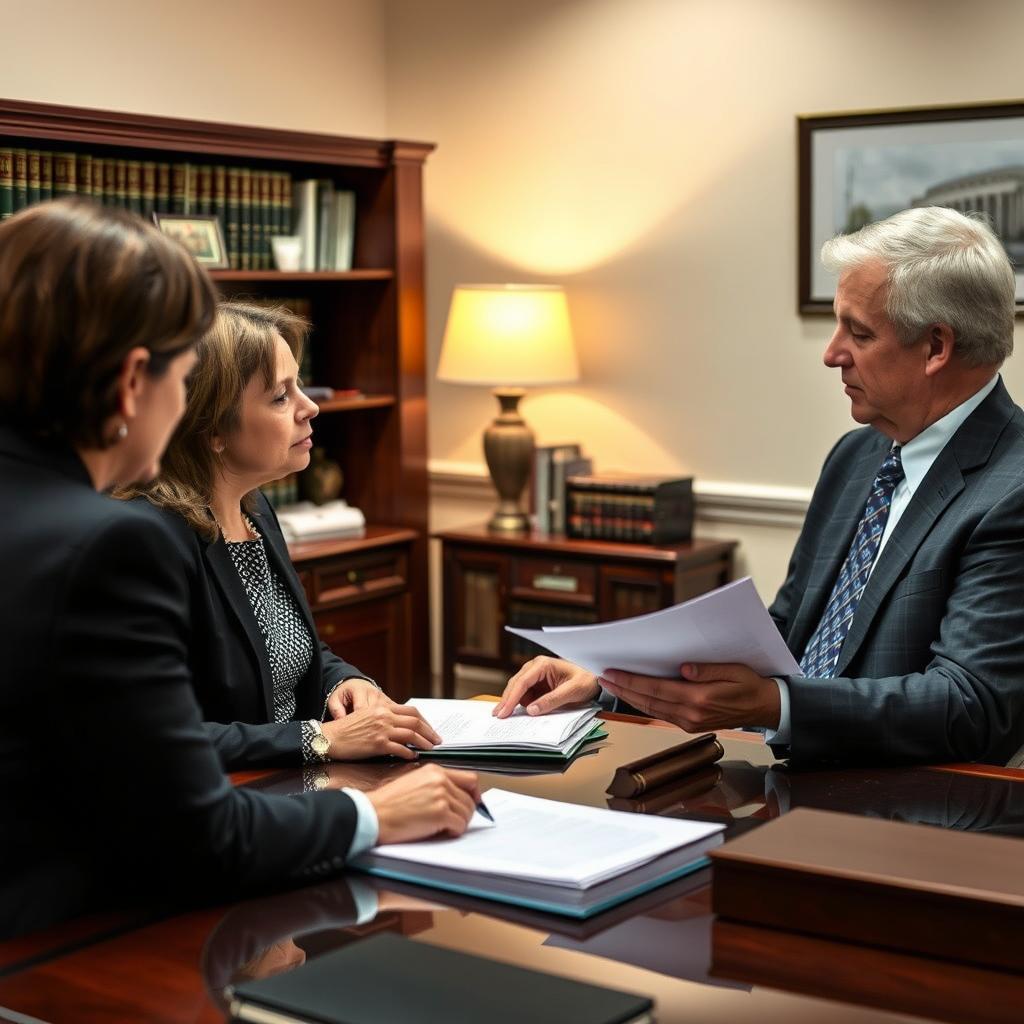
Alimony Modification Lawyer Loudoun County, VA
An alimony order entered by a Virginia court is not necessarily permanent. Circumstances change — a former spouse’s income increases or decreases, a cohabitation relationship begins, a health condition alters earning capacity — and the original spousal support terms may no longer be equitable. Under Va. Code § 20‑107.1, the Loudoun County Circuit Court has jurisdiction to modify an existing spousal support award when a material change in circumstances is shown. Whether you pay or receive alimony, a modification petition can affect your financial stability for years. Mr. Sris and his Of Counsel concentrate in family law matters including alimony modification proceedings in the Twentieth Judicial District. To discuss your situation with an experienced Virginia family law attorney, reach Law Offices Of SRIS, P.C. at (888) 437‑7747. Law Offices Of SRIS, P.C. — Advocacy Without Borders.
What Alimony Modification Means in Loudoun County
Loudoun County is one of Virginia’s fastest‑growing jurisdictions, with a population that reflects a mix of technology professionals, commuters, and suburban families. In high‑income households — common in communities like Ashburn, Leesburg, and Brambleton — spousal support obligations can be substantial. When the circumstances underlying the original award shift, a modification action provides a statutory mechanism to adjust the support amount, duration, or both. The Loudoun County Circuit Court, located at 18 East Market Street in Leesburg, hears petitions to modify spousal support that arise from a divorce decree, while the Loudoun County Juvenile & Domestic Relations District Court handles support matters not tied to a divorce. Regardless of the court, the governing standard is the same: a party must demonstrate a material change in circumstances that was not reasonably foreseeable at the time of the original order.
Virginia law does not prescribe a formula for how much spousal support must change before a modification is warranted. Rather, the court weighs the evidence under the factors set out in Va. Code § 20‑107.1, including each party’s current income, earning capacity, financial needs, and contributions to the family during the marriage. If the obligated party has lost a job or the recipient has gained a higher‑paying position, those facts may support a downward or upward adjustment. Cohabitation in a relationship analogous to marriage can also trigger a review. Mr. Sris and his Of Counsel regularly appear before the Loudoun County Circuit Court and are familiar with how local judges evaluate modification requests.
How Mr. Sris and His Of Counsel Handle Alimony Modification Cases
Modifying alimony begins with filing a motion in the court that entered the original order, accompanied by a supporting affidavit setting forth the claimed material change. Because the burden of proof rests on the moving party, the initial paperwork must be precise. Mr. Sris and his Of Counsel work with clients to compile current financial documentation — pay stubs, tax returns, employment contracts, medical records — and to articulate a clear factual narrative explaining why the existing order should be revised.
After the motion is filed, the court schedules a hearing, which may be preceded by discovery and, in some cases, mediation. At the hearing, the judge reviews the evidence presented by both sides and applies the statutory factors. While some modifications are resolved by agreement, many require a contested hearing. Mr. Sris draws on his decades of litigation experience to present the case efficiently and to protect the client’s financial interests. Throughout the process, the primary goal is to obtain an order that reflects the current economic realities of both parties, consistent with Virginia law.
About Mr. Sris and His Of Counsel Team
Mr. Sris, Owner and Founder of Law Offices Of SRIS, P.C., has practiced law since 1997 and is admitted in Virginia, Maryland, the District of Columbia, New Jersey, and New York. A former prosecutor, he brings a thorough understanding of courtroom procedure to every family law matter, including alimony modification proceedings. Mr. Sris testified before the Virginia House Courts of Justice Committee in support of 2019 HB 635 (chief patron Del. David Bulova), a bill that revised the equitable distribution statute, and that legislative experience informs his approach to complicated financial issues in divorce and post‑divorce cases.
Mr. Sris is joined by a capable team of Of Counsel attorneys who collectively contribute over 120 years of combined legal experience and have achieved 4,739+ documented firm-wide results. Results may vary. The group includes former prosecutors and litigators with backgrounds in family law, criminal defense, and civil practice. On alimony modification matters, Mr. Sris and his Of Counsel collaborate to review financial records, prepare compelling motion practice, and advocate for their clients in the Loudoun County Circuit Court. Every client receives the benefit of this collective knowledge and the firm’s longstanding presence in Virginia.
Frequently Asked Questions
What is alimony modification in Virginia?
Alimony modification is a legal process to change the amount or duration of court‑ordered spousal support. Either the paying spouse or the receiving spouse may file a motion, but the party seeking modification must prove a material change in circumstances since the original order. The modification statute, Va. Code § 20‑107.1, lists factors the court evaluates when deciding whether to increase, decrease, or terminate support.
When can alimony be modified in Loudoun County?
A modification petition may be filed any time after the entry of a final support order if a substantial change has occurred in the financial situation of either party. Examples include involuntary job loss, significant salary increase, the onset of a disability, or the recipient’s cohabitation in a relationship analogous to marriage. The change must not have been foreseeable when the original support was set.
How does the modification process work in Loudoun County courts?
The process begins by filing a motion and affidavit in the court that issued the original award — typically the Loudoun County Circuit Court for post‑divorce alimony. After service on the other party, discovery may be exchanged, and the court sets a hearing date. At the hearing, both sides present financial evidence under the § 20‑107.1 factors. The judge then issues a new order that modifies, continues, or terminates the alimony obligation.
What factors does a Virginia judge consider when modifying spousal support?
Judges apply the same factors used to set initial support, including each party’s earnings, earning capacity, financial needs, age, health, duration of the marriage, and standard of living established during the marriage. In a modification, the focus is on whether a material change has affected one or more of those factors. The court does not automatically recalculate support just because one party requests it.
Do I need a lawyer for an alimony modification in Loudoun County?
While an individual may proceed without counsel, alimony modification involves complex financial disclosure, legal argument about material change, and potential cross‑examination of witnesses. Representing yourself can leave you at a disadvantage if the other side is represented. An experienced attorney can help you assemble evidence, draft your motion, and present a persuasive case to the court. For guidance on your specific situation, reach Law Offices Of SRIS, P.C. at (888) 437‑7747.
What should I bring to a consultation about alimony modification?
Gather your most recent tax returns, pay stubs, bank statements, a copy of the original support order, and any documentation showing the changed circumstances — such as a termination letter, medical records, or proof of the recipient’s cohabitation. The more complete your financial picture, the more accurately your attorney can assess whether a material change exists and advise you on the likelihood of success.
For additional information on Virginia family law, consult Virginia Code Title 20 and the Virginia Judicial System website.
Attorney advertising. Prior results do not guarantee a similar outcome.
Case results depend on a variety of factors unique to each case.