
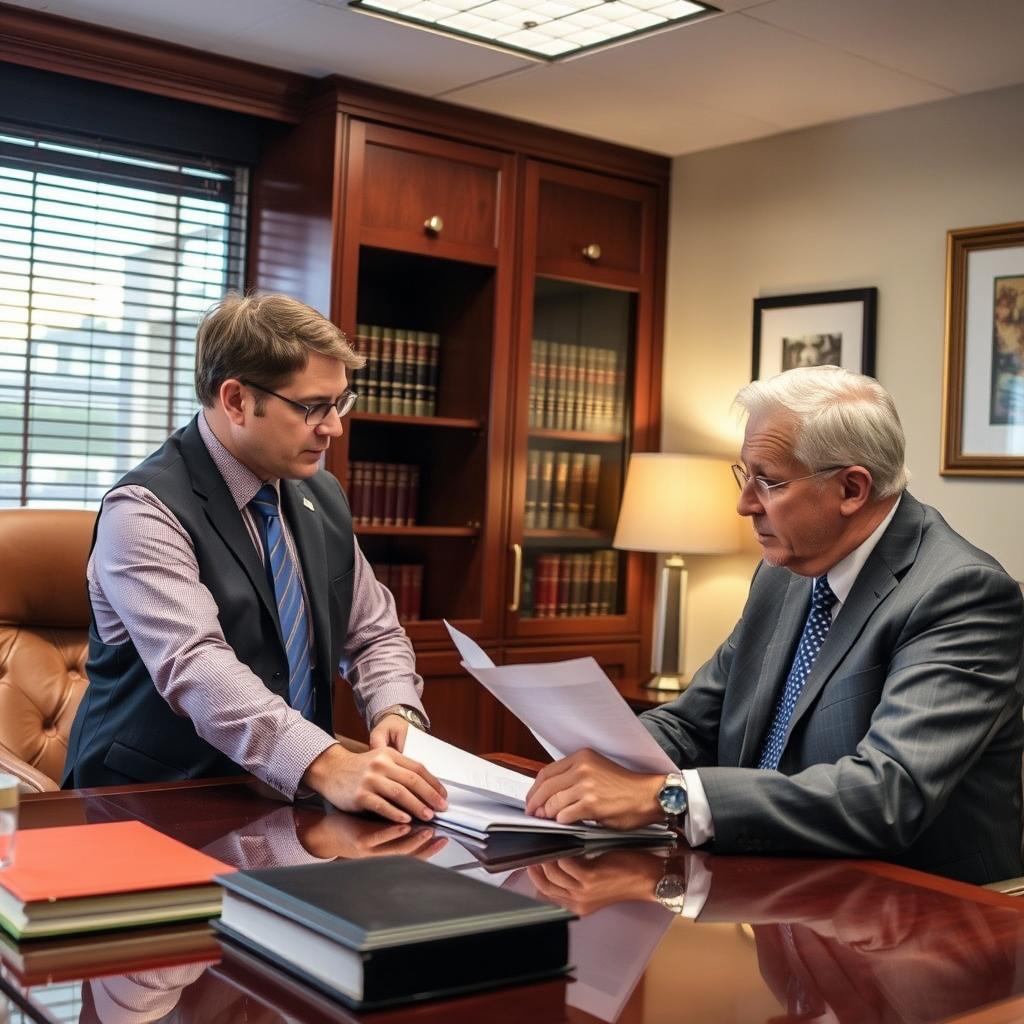
Divorce Decree Enforcement Lawyer Arlington County, VA
A divorce decree sets out each party’s rights and obligations, but when one side fails to comply—whether by withholding spousal support, refusing to transfer property awarded in the decree, or interfering with court-ordered custody and visitation—the other party must act to enforce the order. In Arlington County, Virginia, enforcement of divorce decrees takes place in two courts: the Arlington County Circuit Court (which handles enforcement of divorce, property division, and spousal support orders) and the Arlington County Juvenile and Domestic Relations District Court (which handles enforcement of custody, visitation, and child support orders). The process requires a motion for enforcement, often in the form of a rule to show cause, and may culminate in contempt findings, wage garnishment, liens, or other judicial remedies. Mr. Sris and his Of Counsel at Law Offices Of SRIS, P.C. Concentrate their practice in family law and appear regularly in both Arlington County courts. To discuss your enforcement matter, reach the firm at (888) 437-7747.
Law Offices Of SRIS, P.C. — Advocacy Without Borders.
What Divorce Decree Enforcement Means in Arlington County, Virginia
Arlington County family law matters are handled in two distinct courts. The Circuit Court, located at 1425 N. Courthouse Rd, Suite 2400, Arlington, VA 22201, has exclusive jurisdiction over divorce and the division of marital property. Orders for spousal support, property transfers, and retirement account division fall under its enforcement authority. The Juvenile and Domestic Relations District Court, at the same address, handles enforcement of child custody, visitation, and child support orders. A person seeking enforcement must file a motion—often a petition for a rule to show cause—in the same court that issued the original order. The responding party then has an opportunity to address the allegations. If the court finds a violation, it may impose sanctions ranging from a monetary judgment for the unpaid amount to criminal contempt penalties in egregious cases.
Virginia law provides several enforcement tools under Va. Code §§ 20-107.3, 20-108.1, and 20-124.3, as well as general contempt powers under § 18.2-456. For example, a spousal support arrearage may be collected through an income deduction order, and a custody order may be enforced through a request for make-up visitation or a change in the parenting schedule. The process does not require the moving party to prove willfulness in all instances, but the court evaluates the specific facts and the responding party’s financial and personal circumstances. Because each enforcement action turns on the unique language of the decree and the conduct of the parties, the outcome depends on the evidence presented. Mr. Sris and his Of Counsel work with clients to identify the most effective enforcement strategy and to present the facts clearly to the court.
How Mr. Sris and His Of Counsel Handle Divorce Decree Enforcement Cases
When a client consults the firm about enforcement of a divorce decree, the first step is a thorough review of the original decree and any subsequent orders. Mr. Sris and his Of Counsel examine the specific obligations at issue, the timeline of non‑compliance, and the financial and personal records that document the violation. If the parties are able to communicate, a demand letter or informal negotiation may resolve the dispute without court intervention. When voluntary compliance is not forthcoming, the team prepares and files a motion for enforcement, detailing the alleged violations and the relief sought, and serves the responding party in accordance with Virginia procedural rules.
At the hearing, Mr. Sris or an Of Counsel attorney presents the evidence and argues the motion. Because Mr. Sris has a background as a former prosecutor, he is experienced in court presentation and cross‑examination—skills that translate directly to enforcement hearings. The firm’s Of Counsel team contributes additional litigation experience and familiarity with the practices of the Arlington County courts. Throughout the enforcement process, the firm keeps the client informed and works to resolve the matter as efficiently as the court’s calendar allows. They do not guarantee any particular result, but they focus on achieving a practical resolution that restores the client’s rights under the decree.
About Mr. Sris and His Of Counsel Team
Mr. Sris is the Owner and Founder of Law Offices Of SRIS, P.C. He has practiced law since 1997 and is admitted in Virginia, Maryland, the District of Columbia, New Jersey, and New York. A former prosecutor, he brings courtroom experience to family law matters, including enforcement actions. Mr. Sris testified before the Virginia House Courts of Justice Committee in support of 2019 HB 635 (chief patron Del. David Bulova). Alongside him, the firm’s Of Counsel attorneys collectively possess extensive experience in family law litigation. They appear regularly in Arlington County Circuit Court and the Juvenile and Domestic Relations District Court, serving clients from the firm’s Arlington location at 1655 Fort Myer Dr, Suite 700, Room 719, Arlington, VA 22209—by appointment only. Over 120 years of combined legal experience between Mr. Sris and his Of Counsel inform their approach to enforcement cases, supported by 4,739+ documented firm-wide results. Results may vary.
Frequently Asked Questions
What does it mean to enforce a divorce decree in Virginia?
Enforcing a divorce decree means asking a court to compel the other party to comply with the terms of the final decree or a related order—for example, to pay spousal support, transfer property, or follow a custody schedule. In Virginia, enforcement is typically initiated by filing a motion for a rule to show cause in the court that issued the order. If the court finds non‑compliance, it can enter a judgment for the unpaid amount, hold the party in contempt, or impose other remedies allowed by law. Because the process requires proper service and a hearing, working with an experienced family law attorney can help ensure your motion is presented effectively.
How do I enforce a child support order in Arlington County?
You can seek enforcement of a child support order through the Arlington County Juvenile and Domestic Relations District Court. Common enforcement tools include a petition for a rule to show cause, an income deduction order (wage garnishment), or a lien against property. The court may also suspend the non‑paying parent’s driver’s license or professional licenses in certain circumstances. The specific remedy depends on the amount of arrearage and the payer’s ability to pay. To begin, consult an attorney who can evaluate your order, calculate the arrearage, and file the appropriate motion. For guidance on your situation, reach Law Offices Of SRIS, P.C. at (888) 437-7747.
What are the legal consequences if my ex-spouse ignores the property division ordered in our Virginia divorce?
When a party refuses to transfer assets, sign deeds, or divide retirement accounts as ordered in the final decree, you may file a motion for enforcement in the Arlington County Circuit Court. The court can enter a judgment for the value of the withheld asset, appoint a special commissioner to execute documents on the non‑compliant party’s behalf, or hold the party in contempt. The court may also award attorney fees and costs to the party forced to bring the enforcement action. Because property enforcement often involves complex valuation and tracing issues, it is advisable to work with counsel who understands the equitable distribution framework.
Can I enforce an out-of-state divorce decree in Virginia?
Yes. A divorce decree from another state is generally entitled to full faith and credit under federal law and can be enforced in Virginia once it is domesticated—that is, filed with and recognized by a Virginia court. The domestication process involves registering the foreign decree in the Arlington County Circuit Court or, for child custody matters, under the Uniform Child Custody Jurisdiction and Enforcement Act. After domestication, the decree is treated as a Virginia order and may be enforced through the same contempt and collection mechanisms as an in‑state decree. The firm represents clients in domesticating and enforcing out‑of‑state decrees.
Do I need a lawyer to enforce a divorce decree, or can I handle it myself?
You are not required to hire a lawyer to enforce a divorce decree, but the procedural requirements—drafting a rule to show cause, presenting evidence, and complying with court rules—can be challenging for a non‑attorney. An experienced family law attorney can evaluate the strength of your enforcement claim, calculate arrearages or damages accurately, and advocate for the remedy most likely to resolve the matter. A lawyer also understands the local practices of the Arlington County courts, which may affect how a motion is received. For a consultation, reach Mr. Sris and his Of Counsel at (888) 437-7747.
Serving neighboring counties:
Fairfax County divorce decree enforcement lawyer ·
Prince William County family law enforcement attorney ·
Loudoun County divorce decree enforcement counsel ·
Stafford County enforcement lawyer ·
Fauquier County divorce decree enforcement representation
Official Virginia legal resources:
Virginia Code Title 20 (Domestic Relations) ·
Virginia Judicial System ·
Arlington County Circuit Court
Attorney advertising. Prior results do not guarantee a similar outcome. Results may vary.
Case results depend on a variety of factors unique to each case.