
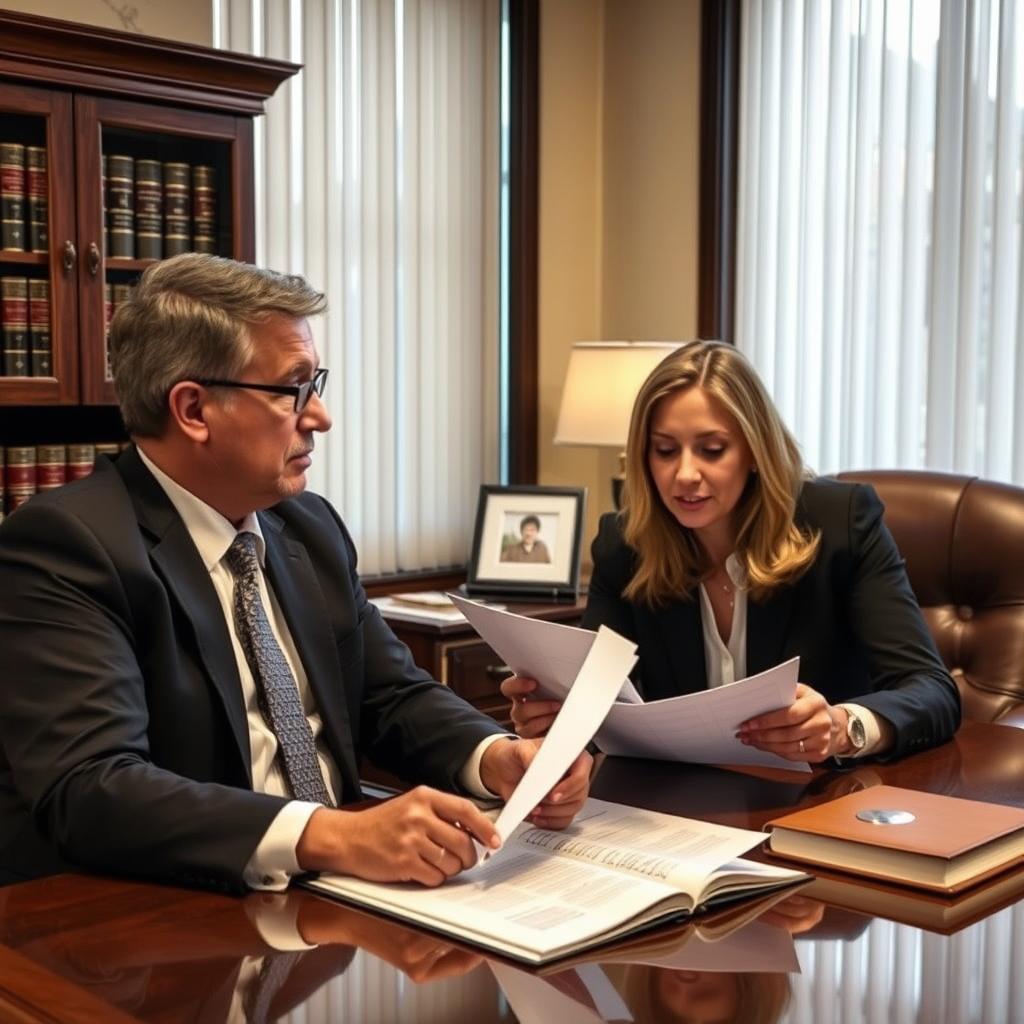
Foreign Divorce Decree Enforcement Lawyer Arlington County, VA
When a marriage ends abroad, the legal questions do not always stop at the border. A divorce decree issued in another country or state often needs to be recognized and enforced in Virginia before its financial, property, or support provisions have practical effect. In Arlington County, that process is handled through the Circuit Court under Virginia’s equitable-distribution and comity framework. Whether you obtained a decree overseas and need to collect a monetary award, divide property located in Arlington, or compel an ex‑spouse to comply with support obligations, the matter requires a court order from the Arlington County Circuit Court. Mr. Sris and his Of Counsel represent clients before that court in enforcement actions involving foreign judgments. They bring the necessary experience in Virginia family law and cross‑border recognition to help parties secure the relief a valid foreign decree should provide. To discuss your situation, reach Law Offices Of SRIS, P.C. at (888) 437‑7747. Law Offices Of SRIS, P.C. — Advocacy Without Borders.
What Foreign Divorce Decree Enforcement Means in Arlington County, Virginia
Arlington County serves a large population of government employees, military personnel, and professionals who may have lived or married abroad before settling in the Washington, D.C., area. Because the county sits directly across the Potomac River from the District and is home to the Pentagon and other federal agencies, a significant number of residents have international ties. When a divorce was finalized outside the United States or in another state, the decree does not automatically carry enforceable weight in Virginia. A party seeking to enforce property division, spousal support, or cost‑of‑living‑adjustment provisions must file a complaint in the Arlington County Circuit Court asking the court to recognize the foreign judgment and grant enforcement relief.
The legal foundation is a combination of Virginia’s statutory framework for divorce (Va. Code § 20‑91 et seq.) and the common‑law doctrine of comity, which permits Virginia courts to recognize foreign judgments that meet certain fairness and jurisdictional standards. The Circuit Court at 1425 N. Courthouse Rd, Suite 2400, Arlington, VA 22201 is the court of record for all divorce and equitable‑distribution matters in the county. J&DR District Court handles standalone custody, support, and protective orders but does not have jurisdiction over the divorce‑decree enforcement itself. Because foreign‑decree cases often involve property located in Arlington—real estate, retirement accounts, bank accounts—the Arlington court is the appropriate venue for enforcement. Mr. Sris and his Of Counsel appear regularly before the Arlington County Circuit Court and are familiar with the procedural steps required to domesticate a foreign decree.
How Mr. Sris and His Of Counsel Handle Foreign Divorce Decree Enforcement Cases
Each enforcement matter begins with a careful review of the foreign decree and supporting documentation to determine whether it meets the criteria for recognition under Virginia law. The court will examine whether the issuing tribunal had jurisdiction over the parties, whether the decree is final under the law of the place of issuance, and whether fundamental due‑process protections were observed. In cases originating from countries that are parties to multilateral enforcement conventions—such as the 1961 Hague Apostille Convention or bilateral recognition treaties—authentication may proceed under a simplified process. However, many foreign decrees from jurisdictions without such treaties still can be recognized under general comity principles, provided they are properly authenticated.
After the decree is found enforceable, the enforcement action itself may involve contempt proceedings, income‑withholding orders, asset‑attachment motions, or orders to compel specific performance. Because Virginia is an equitable‑distribution state, the court may need to classify property located in the Commonwealth as marital or separate according to the original decree’s terms. The timeline for enforcement varies by the complexity of the assets, whether the other party contests recognition, and the court’s docket. Mr. Sris and his Of Counsel work through each stage with attention to both the procedural requirements of the Arlington County Circuit Court and the substantive standards that govern foreign‑judgment recognition. Their collective experience includes cross‑border matrimonial enforcement involving parties located in multiple jurisdictions.
About Mr. Sris and His Of Counsel Team
Mr. Sris, Owner and Founder of Law Offices Of SRIS, P.C., has practiced family law since founding the firm in 1997. His background as a former prosecutor gives him an in‑depth understanding of trial procedure and evidentiary standards—skills that carry over into contested enforcement hearings. He is admitted in Virginia, Maryland, the District of Columbia, New Jersey, and New York, and he regularly handles family‑law matters involving international elements. Mr. Sris testified before the Virginia House Courts of Justice Committee in support of 2019 HB 635 (chief patron Del. David Bulova), contributing to the legislative discussion on equitable‑distribution procedure.
The team includes experienced Of Counsel attorneys who support foreign‑decree enforcement work with litigation, document authentication, and asset‑tracing knowledge. Because every Of Counsel attorney is engaged through Excella, the firm maintains a flexible structure that allows it to draw on a wide range of legal backgrounds without the constraints of an associate‑partner hierarchy. Mr. Sris and his Of Counsel bring over 120 years of combined legal experience, having achieved over 4,739 documented firm-wide results. Results may vary. Clients benefit from a team that blends Virginia courtroom knowledge with a practical understanding of cross‑border enforcement challenges.
Frequently Asked Questions
How does a Virginia court enforce a foreign divorce decree?
Enforcement begins with the filing of a complaint in the Arlington County Circuit Court asking the court to recognize the foreign decree as a valid judgment. The court must determine that the issuing tribunal had jurisdiction and that the decree is final and unmodifiable under the law of the originating jurisdiction. Once recognized, the Virginia court may use contempt powers, wage assignments, property liens, and other enforcement mechanisms to compel compliance. The exact procedure depends on the nature of the obligation—whether it is a property transfer, a monetary award, or support arrears—and whether the party opposing enforcement raises jurisdictional or procedural objections.
What is the difference between enforcing a foreign divorce decree and domesticating a foreign judgment?
Enforcement refers to compelling a party to carry out the terms of an already‑existing decree, while domestication is the legal step of making a foreign judgment equivalent to a Virginia judgment for enforcement purposes. In Arlington County, the domestication process typically involves filing a certified copy of the foreign decree, an authenticated court record, and a complaint that sets out the grounds for recognition. Once the Circuit Court enters an order recognizing the decree, the court can then entertain motions for contempt, asset turnover, or other enforcement remedies as if the decree had been entered in Virginia originally.
Do I need a lawyer to enforce a foreign divorce decree in Arlington County?
While you are not legally required to have a lawyer, the procedural and evidentiary demands make legal counsel advisable. The enforcement action requires presenting a foreign court document that may need authentication under an applicable treaty or through the laws of the foreign country. You must also demonstrate to the satisfaction of the Arlington County Circuit Court that the decree is final and enforceable. An experienced family‑law attorney can manage these requirements, anticipate defenses the other party may raise, and pursue contempt or attachment remedies effectively. For a consultation, reach Mr. Sris and his Of Counsel at (888) 437‑7747.
How long does it take to enforce a foreign divorce decree in Arlington County?
The timeline depends on whether the other party contests recognition, the complexity of the assets, and the court’s docket. An uncontested recognition proceeding may move through the court quickly after all required documentation is filed, while a contested matter involving jurisdictional disputes or foreign‑law questions can take longer. The Arlington County Circuit Court schedules hearings on its calendar; parties should be prepared for a process whose length is driven by the facts and the court’s availability rather than by fixed statutory deadlines. Your attorney can provide a more tailored estimate after reviewing the specifics.
Can a Virginia court modify a foreign divorce decree?
Under the comity principle, Virginia courts generally treat a foreign divorce decree as res judicata on the matters it adjudicates. This means the court will not rewrite property division or spousal‑support provisions that were final in the issuing jurisdiction, absent a statutory basis for modification. However, certain ongoing obligations—such as child support—may be subject to modification under Virginia law if jurisdiction is properly invoked. The distinction between enforcement and modification is important and should be evaluated with counsel.
Fairfax County Family Law Lawyer · Prince William County Family Law · Loudoun County Divorce Attorney · Stafford County Family Law Firm · Fauquier County Divorce & Family Lawyer
Primary sources: Virginia Code Title 20 · Arlington Circuit Court · Virginia Judicial System
Attorney advertising. Prior results do not guarantee a similar outcome. Results may vary.
Case results depend on a variety of factors unique to each case.