
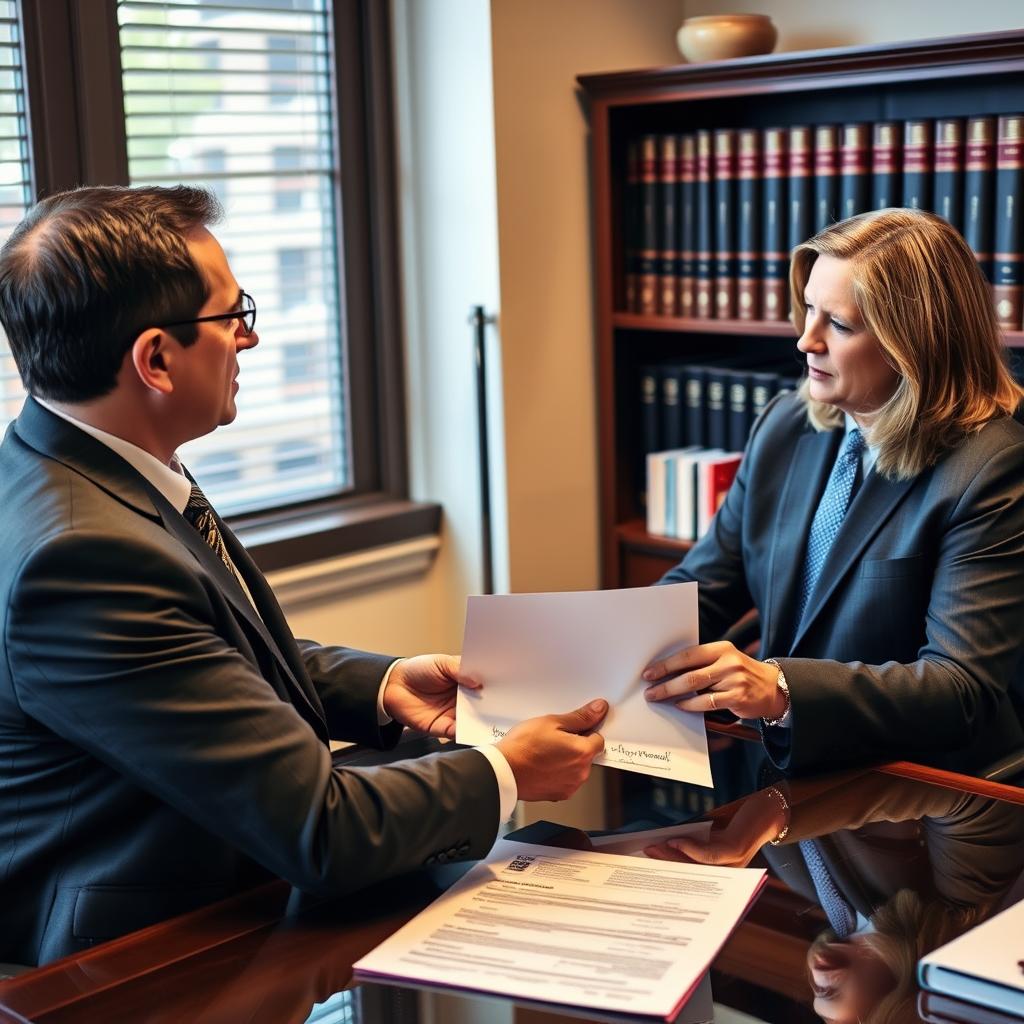
Marital Settlement Agreement Lawyer Fairfax County
A Marital Settlement Agreement Lawyer Fairfax County drafts and enforces the binding contract that finalizes your divorce terms. This document, governed by Virginia law, dictates property division, support, and custody. You need a lawyer who knows Fairfax County court procedures to protect your rights. Law Offices Of SRIS, P.C.—Advocacy Without Borders. provides this critical representation. (Confirmed by SRIS, P.C.)
Statutory Definition of a Marital Settlement Agreement in Virginia
A Marital Settlement Agreement (MSA) in Virginia is a contract defined and enforced under state statute. The Virginia Code provides the framework for its creation and legal effect. This contract becomes the final decree of your divorce. It must address all statutory requirements to be valid. A Marital Settlement Agreement Lawyer Fairfax County ensures your agreement meets these legal standards. Failure to comply can lead to the agreement being set aside.
Virginia Code § 20-109.1 — Contract — Incorporated into Final Decree. This statute governs how an MSA is treated by the court. Once signed by both parties, the agreement can be incorporated into the final divorce decree. Incorporation makes the contract’s terms enforceable as a court order. Violating the order can result in contempt of court charges. The statute allows for modification of support terms under certain conditions. It also outlines procedures for enforcing the agreement’s terms.
Virginia law treats an MSA as a binding contract. The principles of contract law apply to its interpretation and enforcement. This includes requirements for offer, acceptance, and consideration. The agreement must be entered into voluntarily by both parties. It must also be fair and equitable at the time of signing. A court can refuse to incorporate an unconscionable agreement. Understanding these contract principles is essential for a Fairfax County divorce.
The agreement must be incorporated into the final divorce decree.
An MSA does not automatically become a court order upon signing. The signed agreement must be presented to the Fairfax County Circuit Court. The judge will review the document for fairness and statutory compliance. If approved, the judge enters an order incorporating the MSA. This order has the full force of law behind it. Enforcement actions for violations are then handled through the court.
Virginia law requires the agreement to address specific issues.
The Virginia Code mandates that an MSA resolve all marital issues. This includes the equitable distribution of marital property and debts. It must establish spousal support terms, if any are agreed upon. Child custody, visitation, and support must be detailed if children exist. The agreement should also cover health insurance and tax implications. A thorough document prevents future disputes and litigation.
Modification of terms is possible under specific circumstances.
Virginia law allows for the modification of certain MSA terms post-divorce. Child support and custody orders can be modified based on a material change in circumstances. Spousal support terms may also be modifiable unless expressly waived. Property division terms, however, are generally final and non-modifiable. Understanding what can and cannot be changed is critical. A lawyer can advise on the likelihood of a successful modification petition.
The Insider Procedural Edge in Fairfax County Circuit Court
The Fairfax County Circuit Court at 4110 Chain Bridge Road, Fairfax, VA 22030, is where your MSA is finalized. This court handles all divorce and equitable distribution cases in the county. Knowing the local procedural rules is a distinct advantage. Judges here expect precise filings and adherence to local customs. Filing fees and procedural timelines are strictly enforced. A misstep can delay your case for months.
The court’s Domestic Relations Case Management system requires specific steps. All parties must attend a mandatory orientation session. Financial disclosure statements must be filed using court-approved forms. Settlement conferences are often ordered before a trial date is set. The local rules dictate the format for presenting an MSA for incorporation. Procedural specifics for Fairfax County are reviewed during a Consultation by appointment at our Fairfax County Location.
Filing fees and costs are set by the Virginia Supreme Court.
The current filing fee for a divorce complaint in Fairfax County is $89. Additional fees apply for serving the complaint on the other party. There are also costs for filing the final decree and MSA. Court costs can increase if motions or hearings are required. Budgeting for these expenses is part of case planning. Your lawyer will provide a clear estimate of all anticipated court costs.
The timeline from filing to final decree varies.
An uncontested divorce with an MSA can be finalized relatively quickly. Virginia requires a separation period before granting a divorce. For a no-fault divorce, you must be separated for one year. If you have a signed separation agreement, the period is six months. The court’s docket schedule also impacts the final hearing date. A contested case without an agreement can take a year or more.
Local rules mandate financial disclosure.
Fairfax County Circuit Court requires full financial disclosure. Both parties must file a Financial Statement form. This form details income, assets, debts, and monthly expenses. Hiding assets or income can result in the agreement being voided. The court uses this information to assess the fairness of the MSA. Complete honesty in disclosure is non-negotiable.
Penalties for a Faulty Agreement and Defense Strategies
The most common penalty for a faulty MSA is the agreement being set aside by the court. This leaves all issues unresolved and subject to litigation. The court will then decide property division, support, and custody. This process is costly, time-consuming, and unpredictable. A poorly drafted agreement can also lead to enforcement problems. You may need to return to court repeatedly to enforce terms.
| Offense / Issue | Penalty / Consequence | Notes |
|---|---|---|
| Unconscionable Agreement | Court refuses incorporation; case proceeds to trial. | Judge finds terms grossly unfair to one party. |
| Lack of Voluntary Consent | Agreement voided for duress, fraud, or undue influence. | Must prove coercion or deception in signing. |
| Incomplete Financial Disclosure | Agreement can be vacated; possible sanctions for hiding assets. | Virginia law requires full and honest disclosure. |
| Violation of Incorporated Terms | Contempt of court charges; fines, attorney’s fees, possible jail. | Enforced as a court order, not just a contract. |
| Failure to Address All Issues | Leaves issues open for litigation; additional court hearings required. | Increases legal costs and prolongs emotional stress. |
[Insider Insight] Fairfax County prosecutors and judges scrutinize MSAs for procedural fairness. They prioritize the best interests of any children involved. Agreements that appear one-sided are closely examined. The court expects both parties to have had independent legal advice. Judges here are less likely to rubber-stamp an agreement signed without counsel. Having a Virginia family law attorney draft your MSA is a strong defense against future challenges.
Defense strategy starts with proper drafting and disclosure.
The best defense is a well-drafted, thorough agreement. It should clearly define separate and marital property. Support calculations should follow Virginia child support guidelines. Custody and visitation schedules must be detailed and practical. Including dispute resolution clauses can avoid future court battles. A lawyer ensures the language is precise and legally enforceable.
Proving voluntary consent protects the agreement.
A common attack on an MSA is claiming it was signed under duress. Having separate legal counsel for each party is strong evidence of voluntariness. The agreement should include a clause stating it was entered freely. There should be no evidence of threats or coercion. A history of negotiations and revisions can demonstrate mutual consent. Your lawyer will document the process to defend the agreement’s validity.
Why Hire SRIS, P.C. for Your Fairfax County Marital Settlement Agreement
Bryan Block, a former Virginia State Trooper, brings unique insight to family law negotiations. His background in investigation and procedure is invaluable for building your case. He understands how to present facts and secure favorable terms. SRIS, P.C. has extensive experience in Fairfax County domestic relations courts. Our team knows the judges, the commissioners, and the local rules. This local knowledge translates into efficient and effective representation for your MSA.
Primary Attorney: Bryan Block
Credentials: Former Virginia State Trooper. Extensive litigation experience in Virginia courts.
Practice Focus: Divorce, Marital Settlement Agreements, Equitable Distribution, Support.
Locality Experience: Handled numerous family law matters in Fairfax County Circuit Court.
Our firm approach is direct and strategic. We focus on achieving a settlement that protects your long-term interests. We prepare every case as if it will go to trial. This preparation gives us use in negotiations. We explain the legal realities without sugarcoating them. You will know the strengths and weaknesses of your position. Explore our experienced legal team for more on our attorneys.
Localized FAQs for Fairfax County Marital Settlements
What is the difference between a separation agreement and an MSA in Virginia?
A separation agreement is signed during the separation period. A Marital Settlement Agreement is typically the final version incorporated into the divorce decree. The terms are often very similar. The MSA is the document that becomes a court order.
Can I modify my Marital Settlement Agreement after the divorce in Fairfax County?
Child custody, visitation, and support can be modified with a material change in circumstances. Property division terms are generally permanent. Spousal support may be modifiable unless the agreement expressly states it is non-modifiable. You must file a petition with the Fairfax County Circuit Court.
What happens if my spouse violates our incorporated Marital Settlement Agreement?
You file a Motion for Rule to Show Cause in Fairfax County Circuit Court. This is a contempt proceeding. The court can order compliance, payment of your attorney’s fees, fines, or even jail time. Enforcement is handled through the court that entered the order.
Do both spouses need a lawyer for a Marital Settlement Agreement in Virginia?
Virginia law does not require it, but it is strongly advised. The Fairfax County court scrutinizes agreements where one party lacked counsel. Having independent legal advice strengthens the agreement’s validity. It ensures both parties understand their rights and the terms.
How long does it take to get a divorce with an MSA in Fairfax County?
After meeting the statutory separation period, an uncontested divorce with an MSA can be finalized in a few months. The timeline depends on court docket availability. The process is faster than a fully contested divorce trial. Your lawyer can provide a more specific estimate.
Proximity, Contact, and Final Disclaimer
Our Fairfax County Location is strategically positioned to serve clients throughout the region. We are accessible for meetings to discuss your marital settlement needs. Consultation by appointment. Call 888-437-7747. 24/7.
SRIS, P.C. – Fairfax
Address: 10505 Judicial Drive, Suite 201, Fairfax, VA 22030
Phone: 888-437-7747
If you are facing other legal challenges, our firm provides criminal defense representation across Virginia. For specific driving-related charges, our DUI defense in Virginia team is also available.
Past results do not predict future outcomes.