
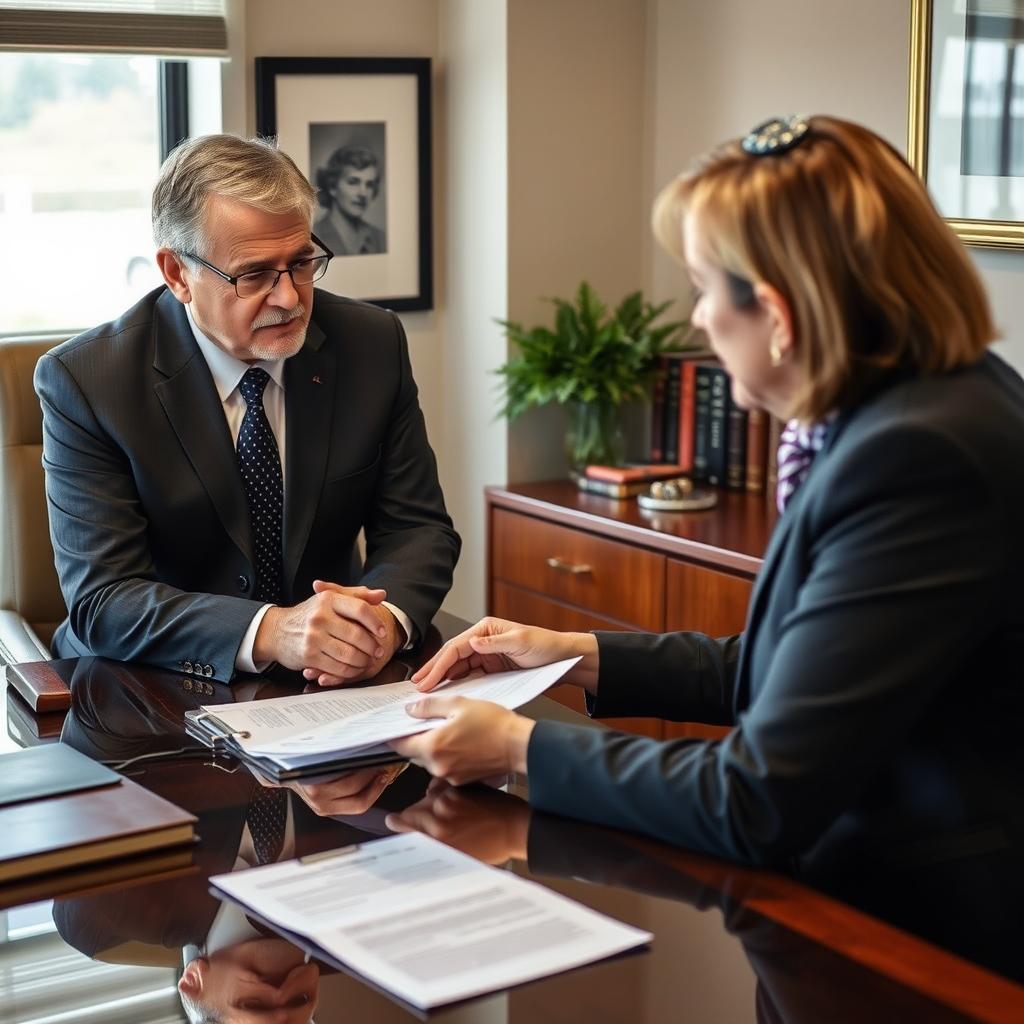
Marital Settlement Agreement Lawyer Stafford County
A Marital Settlement Agreement Lawyer Stafford County drafts and enforces the binding contract that finalizes your divorce terms. This document controls property division, spousal support, and debt allocation under Virginia law. You need a lawyer who knows Stafford County court procedures to protect your rights. Law Offices Of SRIS, P.C.—Advocacy Without Borders. provides this critical representation. (Confirmed by SRIS, P.C.)
Statutory Definition of a Marital Settlement Agreement in Virginia
A Marital Settlement Agreement (MSA) in Virginia is a contract governed by statute, not merely a private deal. The Virginia Code provides the framework for its creation and enforcement. Understanding this legal basis is the first step in securing your future.
Virginia Code § 20-109.1 governs marital settlement agreements, classifying them as enforceable contracts upon court incorporation, with the maximum penalty for breach being contempt of court sanctions including fines or jail.
When you sign a Marital Settlement Agreement Lawyer Stafford County clients use, you are creating a binding contract. The court does not draft this document for you. You and your spouse, with your attorneys, negotiate its terms. Once signed and notarized, it is presented to the judge. If the judge finds it is not unconscionable and was entered voluntarily, the judge will incorporate it into your final divorce decree. At that moment, under § 20-109.1, it becomes a court order. This transformation is critical. A breached contract allows for a lawsuit for damages. A breached court order allows for a motion for contempt, which can result in immediate penalties. This is why precise drafting by a Virginia family law attorney is non-negotiable.
The agreement must address all statutory grounds for divorce.
Your MSA must correlate with the grounds for divorce you plead. Virginia is a mixed no-fault and fault state. You can cite a one-year separation (no-fault) or grounds like adultery, cruelty, or desertion (fault). The terms of your agreement, especially regarding spousal support or property division, can be influenced by fault. A Stafford County marital settlement lawyer ensures the agreement’s recitals and terms align with your chosen grounds, preventing judicial rejection.
Child support and custody terms follow separate Virginia guidelines.
Child-related provisions within an MSA are subject to strict statutory guidelines. Child support is calculated using the Virginia Child Support Guidelines found in § 20-108.2. Custody and visitation terms must affirm the child’s best interests under § 20-124.3. While parents can agree to terms, a Stafford County judge will still review them for the child’s welfare. The agreement cannot waive a child’s right to support. Our legal team ensures these provisions are correctly calculated and articulated to pass judicial scrutiny.
Modification of terms is possible only under specific circumstances.
An MSA is designed to be final, but Virginia law allows modification under certain conditions. Spousal support can be modified based on a material change in circumstances under § 20-109. Child support is always modifiable upon a showing of such a change. Property division terms, however, are typically final and cannot be changed later. A Marital Settlement Agreement Lawyer Stafford County explains which parts of your agreement are set in stone and which can be adapted if life changes dramatically.
The Insider Procedural Edge in Stafford County Circuit Court
Your marital settlement agreement is finalized at the Stafford County Circuit Court located at 1300 Courthouse Road, Stafford, VA 22554.
The Stafford County Circuit Court clerk’s Location handles the filing of all divorce pleadings and agreements. You must file your Complaint for Divorce, along with the signed and notarized Marital Settlement Agreement, to initiate the process. If you have an uncontested divorce based on a signed agreement, you may also file an Affidavit for a Divorce Without an Appearance. The current filing fee for a divorce complaint in Stafford County is $89.00. There are additional fees for serving the complaint on your spouse if they do not sign a waiver. Procedural specifics for Stafford County are reviewed during a Consultation by appointment at our Stafford County Location.
The court’s timeline from filing to final decree varies.
An uncontested divorce with a signed agreement typically takes two to three months in Stafford County. The one-year separation period for a no-fault divorce must be complete before you file. After filing, there is a mandatory waiting period. For divorces with no minor children, the wait is 30 days from the date of service. For divorces with minor children, it is 90 days. The judge’s review of the agreement and signing of the final decree occurs after this waiting period. Having a lawyer ensures no procedural missteps cause delays.
Local rules require specific formatting for presented agreements.
The Stafford County Circuit Court requires the Marital Settlement Agreement to be a separate document from the divorce complaint. It must have a proper caption, be signed by both parties, and be notarized. The agreement should be clear and unambiguous to avoid future disputes. Judges here expect the document to thoroughly address all marital issues. A poorly drafted agreement will be sent back for revisions, dragging out your case. Our experienced legal team prepares agreements that meet all local formatting and substantive requirements on the first submission.
Penalties for Breach and Defense Strategies for Your Agreement
The most common penalty for violating a court-incorporated MSA is a finding of contempt, which can result in fines or even jail time.
When your MSA becomes a court order, violating it is not just a breach of contract. It is contempt of court. The aggrieved party files a Motion for Rule to Show Cause. The court will hold a hearing. If the violation is proven, the judge has broad discretion to enforce the order. The goal is coercion to comply, not merely punishment.
| Offense | Penalty | Notes |
|---|---|---|
| Failure to Pay Spousal Support | Wage garnishment, lien on property, contempt fines, jail up to 10 days. | Virginia Code § 20-114 allows income deduction orders. |
| Failure to Transfer Property | Contempt finding; court may sign deed on party’s behalf. | Judge can enforce specific performance of the contract terms. |
| Failure to Pay Debts as Ordered | Creditor can sue either party; responsible party may be held in contempt. | The agreement does not shield you from creditor action. |
| Violation of Custody/Visitation Terms | Contempt; modification of custody terms; make-up visitation. | Best interest of the child remains the court’s primary focus. |
[Insider Insight] Stafford County judges and prosecutors take the enforcement of court-ordered agreements seriously. They view a signed MSA as a solemn commitment to the court and the other party. Frivolous or bad-faith violations are met with swift penalties. However, they also recognize genuine disputes over interpretation. Presenting a clear, well-documented case on a motion for enforcement is critical. Our attorneys are familiar with the temperament of the local bench.
Defending against an enforcement action requires proving compliance or impossibility.
A strong defense against a contempt motion is proof you complied with the agreement’s terms. Keep careful records of all payments and communications. Another defense is that compliance was impossible due to circumstances unforeseen at the time of signing, like sudden job loss or disability. The key is documentation. A Stafford County marital settlement lawyer can help you gather and present this evidence to avoid sanctions.
Preventing breach starts with precise drafting and clear terms.
The best defense is an offense. The most effective way to avoid enforcement battles is to have a crystal-clear agreement from the start. Vague language about “reasonable visitation” or “shared debt” invites conflict. Your Marital Settlement Agreement Lawyer Stafford County must define terms explicitly: exact dates, specific dollar amounts, and named accounts. This clarity leaves little room for misinterpretation and protects you from future motions.
Why Hire SRIS, P.C. for Your Stafford County Marital Settlement Agreement
SRIS, P.C. assigns attorneys with direct Virginia family law litigation experience to every marital settlement agreement case in Stafford County.
Our lead family law attorney for Stafford County matters has over a decade of focused experience in Virginia circuit courts. This attorney has negotiated and drafted hundreds of marital settlement agreements, ensuring they withstand judicial review and enforcement actions. The attorney’s deep knowledge of Virginia Code Title 20 and local Stafford County procedures provides a decisive advantage in protecting your assets and parental rights.
SRIS, P.C. has a dedicated Location in Stafford County to serve you locally. Our firm’s approach is built on preparation and aggressive protection of your interests. We do not just fill in blanks on a form. We analyze your financial disclosures, assess your long-term needs, and negotiate terms that secure your future. We prepare for the possibility of court enforcement from the very first draft. For detailed cases involving businesses, military pensions, or high-value assets, this rigorous approach is essential. We combine this with strategic legal defense principles to safeguard your position.
Localized FAQs for Stafford County Marital Settlement Agreements
What is the difference between a separation agreement and a marital settlement agreement in Virginia?
A separation agreement is signed while living apart before filing for divorce. A marital settlement agreement is typically signed during the divorce process to finalize all terms. Both are contracts, but the MSA is presented to the court for incorporation into the final decree.
Can I change my marital settlement agreement after the divorce is final in Stafford County?
Property division terms are generally final. Spousal support can be modified with a material change in circumstances. Child support and custody/visitation schedules are always modifiable based on the child’s best interests and changed circumstances.
What happens if my spouse hides assets during the MSA negotiations in Virginia?
Hiding assets is fraud. If discovered, the court can set aside the fraudulent agreement. You can file a new complaint for divorce and seek a new property division. The offending spouse may also be ordered to pay your attorney’s fees and face sanctions.
How long does it take to get a divorce with a signed agreement in Stafford County?
An uncontested divorce with a signed MSA typically takes 2-3 months in Stafford County Circuit Court. This timeline starts after filing and includes mandatory waiting periods of 30 or 90 days, depending on if you have minor children.
Do both spouses need their own lawyer for a marital settlement agreement?
Virginia law does not require it, but it is highly advisable. Each party should have independent legal advice to ensure the agreement is fair and voluntary. This also helps prevent future claims that one party did not understand the terms.
Proximity, Call to Action, and Legal Disclaimer
Our Stafford County Location is strategically positioned to serve clients throughout the county. We are easily accessible from areas like Aquia, Garrisonville, and Falmouth. For a case review regarding your marital settlement agreement, contact us directly. Consultation by appointment. Call 855-696-6688. 24/7.
Law Offices Of SRIS, P.C.—Advocacy Without Borders.
Stafford County Location
Phone: 855-696-6688
Past results do not predict future outcomes.
See also
- Marital Settlement Agreement Lawyer Stafford VA
- marital agreement lawyer Stafford VA
- prenuptial agreement lawyer Stafford VA
- Divorce & Family Law Attorney in Stafford County, Virginia
- Divorce & Family Law Attorney in Stafford County, Virginia
- Stafford County Family Law Lawyer – How Can We Protect Your Family?