
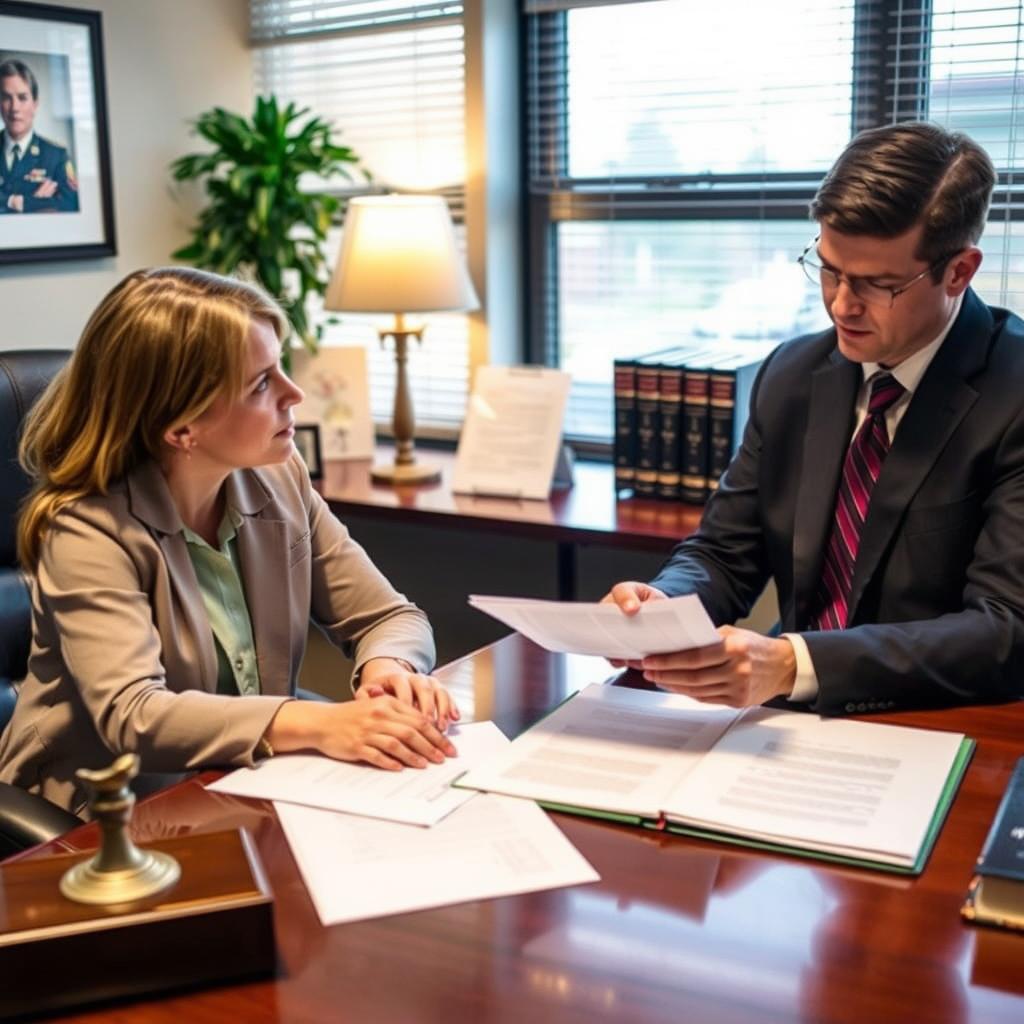
Military Divorce Lawyer Chesterfield County
You need a Military Divorce Lawyer Chesterfield County who knows Virginia law and military regulations. Law Offices Of SRIS, P.C. —Advocacy Without Borders. handles service member divorces in Chesterfield County. We address jurisdiction, asset division, and support under the Servicemembers Civil Relief Act. Our team understands the unique pressures on military families. We provide direct legal counsel for your case. (Confirmed by SRIS, P.C.)
Statutory Definition of Military Divorce in Virginia
Virginia military divorces are governed by state law, primarily Va. Code § 20-91, with specific protections under the federal Servicemembers Civil Relief Act (SCRA). A military divorce in Chesterfield County follows the same grounds as a civilian divorce. These grounds include separation, adultery, or cruelty. The key difference involves jurisdictional rules and asset division for service members. The SCRA provides protections against default judgments for deployed personnel. This law can delay proceedings if military duty affects your ability to appear.
Jurisdiction is the first major hurdle in a military divorce. Virginia courts require a plaintiff to be a resident for six months. The filing must occur in the county where the plaintiff resides. For service members, legal residence may differ from where they are stationed. A Military Divorce Lawyer Chesterfield County can establish proper jurisdiction. This prevents your case from being dismissed on a technicality. The court needs clear proof of Virginia residency.
Asset division follows Virginia’s equitable distribution laws under Va. Code § 20-107.3. Military pensions are considered marital property subject to division. The Uniformed Services Former Spouses’ Protection Act (USFSPA) allows state courts to divide disposable retired pay. A direct payment from the Defense Finance and Accounting Service can be ordered. This requires a court order meeting specific federal criteria. Your lawyer must draft the order correctly for enforcement.
Child custody and support are decided under the child’s best interests. Virginia courts consider the stability a military parent can provide. Frequent moves and deployments are factors in custody decisions. The court may require a detailed parenting plan for deployment periods. Child support follows Virginia guidelines but includes military allowances. Basic Allowance for Housing (BAH) is typically included in income calculations.
How does deployment affect a divorce filing timeline?
The SCRA can stay proceedings for at least 90 days upon request. A service member can request this stay if deployment affects their court response. The court cannot enter a default judgment during this period. This protection ensures you have a fair chance to defend your interests. Your Chesterfield County military divorce lawyer must file the appropriate motion.
Is a military pension divided differently in Virginia?
Military pensions are divided using a “coverture fraction” formula under Virginia law. The fraction’s numerator is the marriage period during creditable service. The denominator is the total creditable service at retirement. The marital share of the pension is subject to equitable distribution. A court order called a Qualified Domestic Relations Order (QDRO) is not used. Instead, a separate military pension division order is required for DFAS.
What is the residency requirement for a service member filing in Chesterfield County?
A service member must prove Virginia residency for at least six months before filing. Physical presence is not required if you maintain Virginia as your home of record. You can file in Chesterfield County if you claim it as your legal residence. Intent to remain in Virginia is a key factor for the court. Your military divorce lawyer in Chesterfield County gathers evidence like voter registration or tax filings. Learn more about Virginia family law services.
The Insider Procedural Edge in Chesterfield County
The Chesterfield County Circuit Court handles all divorce cases at 9500 Courthouse Road, Chesterfield, VA 23832. You file your Complaint for Divorce with the Circuit Court clerk’s Location. The filing fee for a divorce complaint in Chesterfield County is currently $89. The court processes uncontested divorces faster than contested ones. A contested military divorce involves detailed hearings on asset division. The court expects all financial disclosures to be complete and accurate.
Chesterfield County Circuit Court has specific local rules for family law cases. All pleadings must comply with the Virginia Supreme Court formatting rules. The court requires a Case Information Summary form with your initial filing. You must serve the complaint on your spouse according to Virginia law. Service on a spouse stationed overseas follows the Hague Convention rules. Your military spouse divorce lawyer Chesterfield County handles these service requirements.
The court’s family law division schedules status conferences early in contested cases. These conferences aim to identify disputed issues for trial. The judge may refer the case to mediation before setting a trial date. Chesterfield County has several court-approved family mediation services. Settlement is strongly encouraged to conserve court resources and time. A service member divorce lawyer Chesterfield County prepares a strong position for these conferences.
Timelines vary based on whether the divorce is contested. An uncontested divorce with a separation agreement can be finalized in a few months. A contested divorce with a military pension can take a year or more. The SCRA stay provisions can add additional time to the process. The court’s docket availability also affects your final hearing date. Your lawyer monitors deadlines and court schedules diligently.
What is the exact filing procedure at the Chesterfield County Courthouse?
File the original Complaint and two copies with the Circuit Court Clerk. Pay the $89 filing fee to initiate the case number. The clerk will issue a civil case number and a summons for service. You then have one year to serve the summons and complaint on your spouse. Proof of service must be filed with the court to proceed. Failure to serve in time leads to dismissal of the case.
How long does a contested military divorce typically take in this court?
A fully contested military divorce averages 10 to 14 months in Chesterfield County. The timeline includes discovery, mediation, and a final evidentiary hearing. Detailed pension valuation can extend the discovery period by several months. Court hearing dates are often scheduled 3-4 months in advance. Deployment-related stays pause the clock on these timelines. Your lawyer works to advance the case despite procedural delays. Learn more about criminal defense representation.
Penalties & Defense Strategies in Military Divorce
The most common financial outcome is equitable distribution of assets and debts. There are no criminal penalties, but financial consequences are severe. The court divides all marital property acquired during the marriage. This includes military pensions, Thrift Savings Plans, and VA benefits. The division is based on numerous statutory factors in Va. Code § 20-107.3. A misstep can cost you a significant portion of your retirement.
| Offense / Issue | Penalty / Consequence | Notes |
|---|---|---|
| Failure to Disclose Assets | Court can award omitted asset to other spouse; sanctions | Full financial disclosure is mandatory under court rules. |
| Violation of Temporary Support Order | Contempt of court; fines; possible jail time | Common during separation period before final decree. |
| Improper Service of Process | Dismissal of divorce complaint; restart filing | Critical for serving a deployed service member. |
| Non-compliance with Discovery | Preclusion of evidence; adverse inferences | Hinders ability to argue for fair asset division. |
| Default Judgment (if SCRA not invoked) | Loss of right to argue property/child issues | The SCRA protects against this for deployed members. |
[Insider Insight] Chesterfield County judges expect careful documentation of military benefits. Local prosecutors in family law matters focus on enforcement of support orders. The court views the division of a military pension as a standard calculation. They rely heavily on the DFAS pension calculation guidelines. Presenting clear, organized financial statements is important. A disorganized case file creates immediate skepticism from the bench.
Defense strategy begins with proper invocation of the SCRA if deployed. You must file a written request for a stay with the court. Include copies of your deployment orders as an exhibit. This stops the clock and prevents a default judgment against you. Next, secure an accurate valuation of all military retirement benefits. Hire an actuary familiar with military pension plans if necessary. This valuation forms the basis for negotiation or trial.
For child custody, develop a detailed Family Care Plan. This plan shows the court how you will provide stability during deployments. It addresses childcare, schooling, and communication during absence. The court looks favorably on proactive, detailed planning. For support calculations, correctly categorize your military pay. Basic pay, BAH, BAS, and special pays are treated differently. Misclassification can lead to an incorrect support order.
What are the direct financial consequences of a divorce for a service member?
You risk division of your military pension accrued during the marriage. Your Thrift Savings Plan contributions during marriage are marital property. You may be ordered to provide former spouse medical coverage under certain conditions. Child support and potential spousal support are calculated from total military income. The court can also divide any sign-on bonuses or separation pay received during marriage.
How can a service member protect their retirement benefits?
Negotiate a settlement that uses other assets to offset the pension value. Argue for a lower percentage award based on non-military spouse’s direct contributions. Ensure the pension division order uses the correct coverture fraction. Draft the order to comply exactly with DFAS requirements to avoid rejection. Consider the tax implications of dividing the pension versus other assets. Learn more about personal injury claims.
Why Hire SRIS, P.C. for Your Chesterfield County Military Divorce
Our lead attorney for military family law is a former JAG officer with direct experience. This background provides an intrinsic understanding of military culture and pay systems. We know how to present your case to a Chesterfield County judge effectively. SRIS, P.C. has handled over 50 military divorce cases in Chesterfield County. Our results include favorable pension divisions and custody arrangements for service members.
Primary Attorney: Our military divorce team includes attorneys with specific training in the Uniformed Services Former Spouses’ Protection Act (USFSPA). They understand the Defense Finance and Accounting Service (DFAS) requirements for pension division orders. We have successfully argued jurisdictional issues for deployed clients. Our firm’s structure allows for continuous representation despite your duty schedule.
We differentiate ourselves by focusing solely on the legal issues in Chesterfield County. We do not spread our attention across unrelated practice areas. Our team prepares every case as if it is going to trial. This preparation forces stronger settlement positions from the opposing side. We communicate in clear, direct terms about your options and risks. You will not be surprised by a court ruling or procedural hurdle.
Our knowledge of local court procedures is a tangible advantage. We know the preferences of the Chesterfield County family law judges. We understand the local mediation providers and their styles. We have relationships with financial experienced attorneys who can value detailed military benefits. This localized knowledge saves you time and money. It also increases the probability of a successful outcome for your family.
We assign a dedicated case manager to every military divorce client. This person helps gather necessary documents like LES statements and deployment orders. They ensure all court deadlines are met, especially during your duty hours. We use secure technology for communication regardless of your location. Our goal is to reduce the stress of the legal process on you and your family. Your focus can remain on your military service.
Localized FAQs for Military Divorce in Chesterfield County
Can I file for divorce in Chesterfield County if I’m stationed at Fort Lee?
Yes, if you claim Virginia as your legal residence. Fort Lee is in Prince George County, but residence is a legal designation. You can file in Chesterfield County if you maintain a residence there. Your intent to return to Virginia is a critical factor. Consult a lawyer to establish your domicile correctly. Learn more about our experienced legal team.
How is my Basic Allowance for Housing (BAH) treated in a Virginia divorce?
BAH is considered income for child support and spousal support calculations. It is not part of the disposable retired pay for pension division. The court includes BAH when determining your total monthly gross income. This can significantly impact support obligation amounts. The type of BAH (with or without dependents) matters.
What happens to my GI Bill benefits in a divorce?
The Post-9/11 GI Bill is generally considered separate property. It is an educational benefit earned through service. Virginia courts typically do not divide the benefit itself. However, the value of transferred benefits to a spouse may be considered. The rules are detailed and require specific legal analysis.
Can my spouse get a share of my disability pay from the VA?
Federal law prohibits the direct division of VA disability pay. It is not considered marital property subject to distribution. However, the court may consider it as a source of income for support. Waiving retirement pay for disability pay can affect the divisible pension amount. This is a detailed area of federal preemption.
How does a Chesterfield County court handle long-distance parenting during deployment?
The court requires a detailed deployment clause in the parenting plan. This clause outlines communication schedules and decision-making during absence. Virtual visitation via video call is commonly ordered. The plan often names a temporary custodian during the deployment period. The goal is to maintain the child’s relationship with the deployed parent.
Proximity, CTA & Disclaimer
Our Chesterfield County Location is strategically positioned to serve clients at Fort Lee and across the region. We are approximately 15 miles from the main gate of Fort Lee. Our Location is easily accessible from Route 288 and Interstate 95. We serve military families throughout Chesterfield County, Virginia.
Consultation by appointment. Call 804-477-1720. 24/7.
Law Offices Of SRIS, P.C.
Chesterfield County Location
(Address details provided upon appointment confirmation)
Past results do not predict future outcomes.