
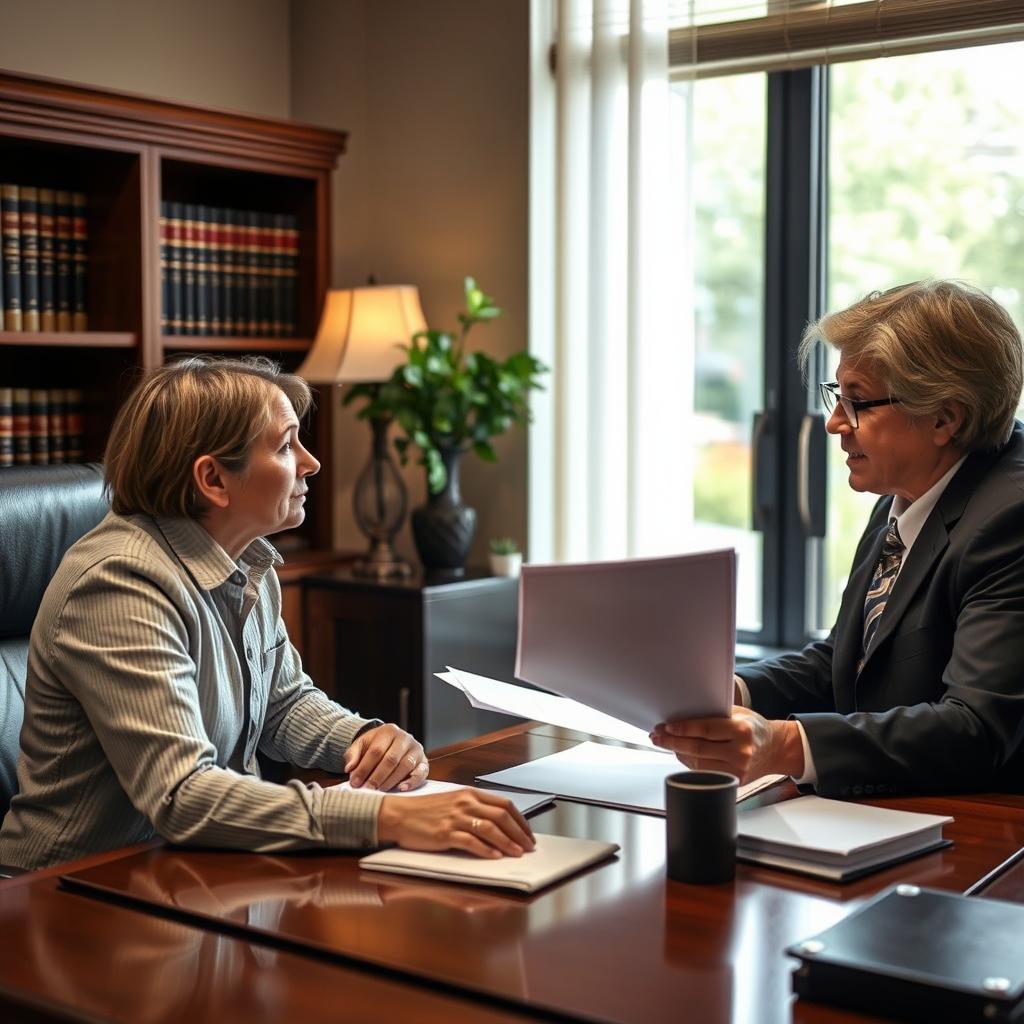
Post Divorce Enforcement Lawyer Loudoun County, VA
You received a final divorce decree, but your former spouse is not paying the agreed spousal support, following the custody schedule, or transferring assets. You followed the process, but the court’s order isn’t being honored. A post‑divorce enforcement lawyer in Loudoun County can help you hold your ex‑spouse accountable. Mr. Sris and his Of Counsel team at Law Offices Of SRIS, P.C. represent individuals throughout Loudoun County, including Ashburn, Leesburg, Sterling, and surrounding areas, in enforcing divorce decrees, support orders, and property‑settlement agreements. Call (888) 437‑7747 to schedule a consultation. Law Offices Of SRIS, P.C. — Advocacy Without Borders.
How a Post‑Divorce Enforcement Case Works in Loudoun County
Enforcement is not a new lawsuit — it is a continuation of the original divorce action. You can file a motion for rule to show cause, asking the judge to find your former spouse in contempt for failing to comply with the decree. The motion is filed in the same court that issued the order: the Loudoun County Juvenile and Domestic Relations District Court for custody and child‑support matters, or the Loudoun County Circuit Court for property division, spousal support, and other divorce‑decree terms.
After the motion is filed, the court issues a show‑cause summons and sets a hearing. At the hearing, you present evidence of the violations — payment records, missed‑transfer documentation, communication logs. The judge evaluates whether non‑compliance was willful. If so, the court has several tools to compel compliance: it can order wage garnishment or income withholding for support; issue a writ of fieri facias for property transfer; impose fines; or, in extreme cases, hold the non‑complying party in civil or criminal contempt, which can include jail until compliance occurs. Our firm helps you gather the necessary evidence and presents a clear case to the judge.
What to Expect When You File a Motion for Contempt
Your first step is a consultation with an attorney to review the decree and the violations. Together, you compile documentation — bank statements, text messages, payment histories. The motion is then drafted and filed, identifying each provision of the decree that was violated and the relief sought.
Once the motion is served on your ex‑spouse, the court schedules a hearing. The hearing is your opportunity to explain, through testimony and evidence, why enforcement is necessary. Many cases resolve without a contested hearing: the mere filing of a contempt motion can prompt compliance. If a hearing is needed, our attorneys present your case and press for meaningful remedies — a purge‑payment schedule, a money judgment for arrears, or even jail for willful contempt. Our goal is to restore the decree’s effectiveness, not to prolong conflict, so we pursue the most efficient path to get you what the court already ordered.
Penalties and Consequences for Virginia Divorce‑Decree Violations
Virginia courts view divorce‑decree violations seriously. Civil contempt sanctions are remedial — they aim to compel compliance, such as ordering immediate payment of overdue support or transfer of property. The contemnor can “purge” the contempt by complying. Criminal contempt punishes past violations and carries a fixed penalty, including possible jail time. The same conduct can lead to both civil and criminal contempt findings.
In addition to fines and jail, the court can require the violating party to pay the other side’s attorney fees and costs. A money judgment for the amount owed, plus interest, is also common. For ongoing obligations like spousal support or child support, the court may enter an income‑deduction order directly with the payer’s employer. These remedies are all available to the person who sought enforcement; our role is to guide you to the outcome that works best in your situation.
Law Offices Of SRIS, P.C. — Your Advocate for Divorce Enforcement in Loudoun County
Mr. Sris, Owner and Founder of Law Offices Of SRIS, P.C., has been practicing since 1997. He is a former prosecutor with insight into how cases are built and defended, now applying that experience to family‑law enforcement. Mr. Sris testified before the Virginia House Courts of Justice Committee in support of 2019 HB 635 (chief patron Del. David Bulova), a bill that revised Virginia’s equitable‑distribution statute. He is admitted to practice in Virginia, Maryland, the District of Columbia, New Jersey, and New York.
Mr. Sris works with a team of experienced Of Counsel attorneys who collectively bring over 120 years of combined legal experience and 4,739+ documented firm-wide results. Results may vary. Their backgrounds include former prosecution, law enforcement, and deep family‑law practice, providing clients with comprehensive support. When you reach out to Law Offices Of SRIS, P.C., you engage a multi‑state firm that treats enforcement actions with the thorough preparation they require.
Frequently Asked Questions About Divorce‑Decree Enforcement in Loudoun County
What is post‑divorce enforcement?
Post‑divorce enforcement is the legal process to compel a former spouse to comply with the terms of a divorce decree — whether that means paying spousal support, transferring property, following custody orders, or paying child support. It is not a new lawsuit; it is a continuation of the original divorce action, handled mostly in the same court that issued the order.
How do I enforce an alimony order in Loudoun County?
If your ex‑spouse is not paying court‑ordered spousal support, you can file a motion for rule to show cause in the Loudoun County Circuit Court. The motion asks the judge to hold the payor in contempt and to order payment of arrears, attorney fees, and other sanctions. The court can also order income withholding so payments are automatically deducted from the payer’s wages.
What can I do if my ex stops paying child support in Loudoun County?
Child‑support enforcement actions are brought in the Loudoun County Juvenile and Domestic Relations District Court. You can request a show‑cause hearing. The court can issue an income‑deduction order, intercept tax refunds, suspend licenses, and even jail a parent who willfully refuses to pay. The Division of Child Support Enforcement (DCSE) can also assist, but having private counsel often speeds the process.
Can a divorce decree be enforced for property division?
Yes. If your former spouse refuses to transfer real estate, retirement accounts, or other assets as described in the decree, you can ask the Loudoun County Circuit Court to enforce the order. The court can order the conveyance directly or, if the property cannot be transferred (e.g., it has been sold), award a money judgment for its value.
What happens if the violation is not willful?
Contempt findings require willful disobedience. If your ex‑spouse demonstrates an inability to comply — for example, a genuine loss of income that prevents support payments — the court may decline to hold them in contempt. However, it can still enter a money judgment for arrears and, where appropriate, modify the underlying obligation.
How long does an enforcement case take in Loudoun County?
The timeline varies. The court can schedule a show‑cause hearing relatively quickly if the matter is urgent — sometimes within weeks. Full resolution, especially if a trial is needed, may take several months. Our attorneys work to move your case forward efficiently, but the court’s calendar and the complexity of the issues ultimately govern the timeline.
Can I get my attorney fees covered if I win the enforcement action?
Virginia law permits the court to award reasonable attorney fees and costs to the prevailing party in contempt proceedings. The judge has discretion to order the non‑complying spouse to pay your legal expenses, which helps offset the cost of enforcement. We present a detailed fee request at the conclusion of your case.
What is the difference between civil and criminal contempt in Virginia?
Civil contempt is remedial — it aims to force future compliance, such as paying overdue support. The contemnor can “purge” the contempt by complying. Criminal contempt is punitive; it punishes a past violation with a set penalty, like a specific fine or jail sentence. Both types can apply in the same enforcement action, depending on the violations.
Do I need a lawyer to enforce a divorce decree?
You are not required to hire an attorney, but enforcement procedures are technical. You must properly serve the motion, gather admissible evidence, and meet the court’s procedural rules. An experienced family‑law attorney can present a strong case, issue subpoenas for financial records, and argue for meaningful remedies. A procedural mistake can delay or derail your case.
What if my ex lives out of state?
The Virginia court that issued the original decree retains authority to enforce it, regardless of where your former spouse now lives. Interstate enforcement often involves registering the Virginia order in the other state under the Uniform Interstate Family Support Act (UIFSA). Our firm can coordinate with out‑of‑state counsel and file the necessary registration documents to ensure the order is enforced across state lines.
Schedule a Consultation with a Post‑Divorce Enforcement Lawyer in Loudoun County
If a divorce decree is not being followed, you have legal options. Mr. Sris and his Of Counsel team at Law Offices Of SRIS, P.C. can evaluate your situation and take the steps necessary to enforce the court’s order. Call (888) 437‑7747 to request a consultation. Appointments are available by phone or at our Ashburn location, by appointment only.
Law Offices Of SRIS, P.C. – Ashburn Location
20130 Lakeview Center Plaza, Room 403
Ashburn, VA 20147
Phone: (888) 437‑7747
Attorney advertising. Prior results do not guarantee a similar outcome. Case results depend on a variety of factors unique to each case. Results may vary.