
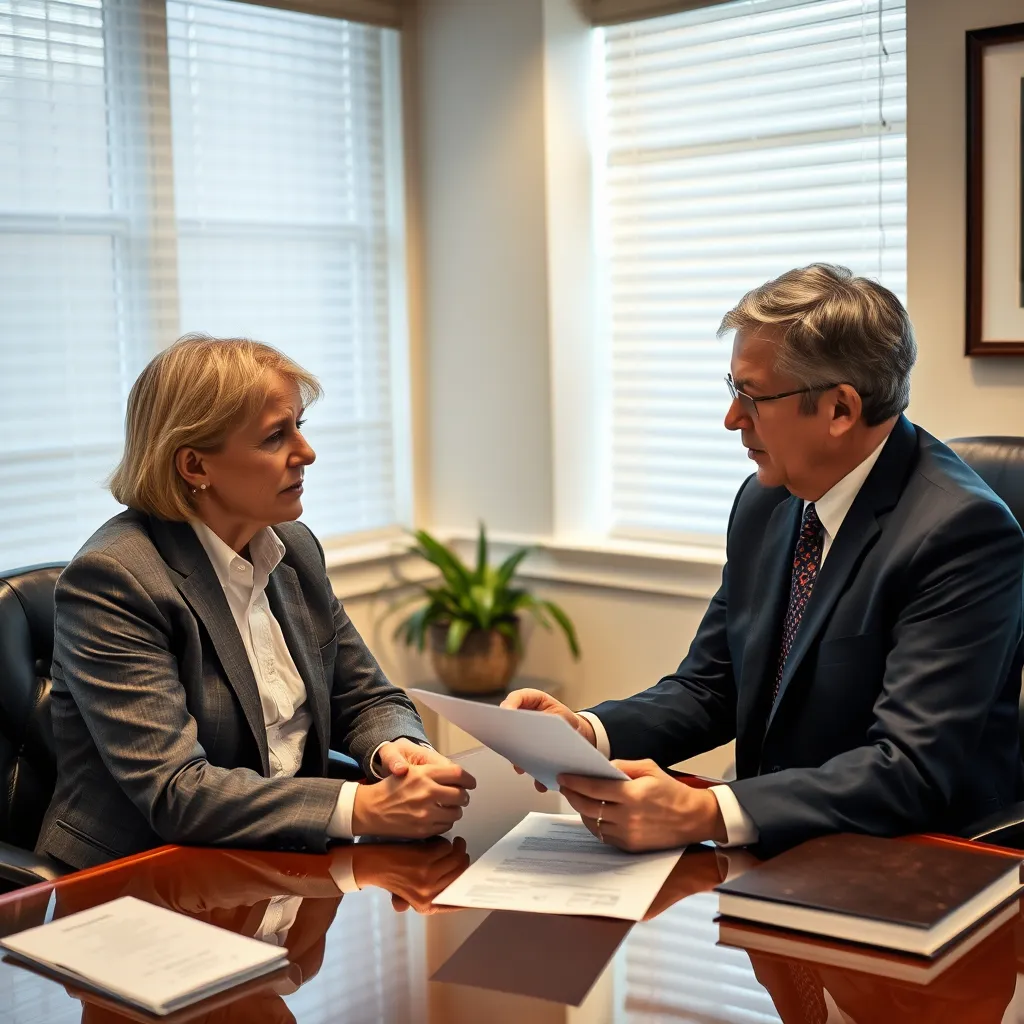
Postnuptial Agreement Lawyer Fairfax, VA
You and your spouse have spent years building a life together—a home, a family, a business. Recently, a change in your financial situation made you both realize it would be wise to put certain understandings about property and support in writing. You are not contemplating divorce; you are strengthening your marriage with clarity. A postnuptial agreement can address exactly those concerns, and having an experienced lawyer guide you through the process is essential. Mr. Sris and his Of Counsel at Law Offices Of SRIS, P.C. help couples in Fairfax City and throughout Northern Virginia create thoughtful, enforceable postnuptial agreements. Reach our location at (888) 437-7747 to discuss your situation. Law Offices Of SRIS, P.C. — Advocacy Without Borders.
Strategy Options for Your Postnuptial Agreement
When you and your spouse decide to formalize your financial understanding after the wedding, you have options. You may want to draft a new agreement from scratch, or you may already have a draft prepared and need an attorney to review its terms for fairness, completeness, and compliance with Virginia law. In some cases, you might be facing a dispute over an existing agreement and need a lawyer to advocate for enforcement or challenge provisions that no longer reflect your circumstances. Mr. Sris and his Of Counsel approach each matter by listening to both parties’ intentions—while preserving separate legal counsel for you—and crafting a solution that aligns with the Virginia Premarital Agreement Act (Va. Code § 20-147 et seq.), which also governs postnuptial agreements.
Virginia is an equitable distribution state, meaning that in a divorce, marital property is divided fairly, not necessarily equally. A well-drafted postnuptial agreement can override the default equitable-distribution factors and give you and your spouse control over how assets, debts, spousal support, and other financial matters would be handled if the marriage ever ends. Our attorneys help you identify which provisions are appropriate for your unique situation and ensure that the final document meets Virginia’s enforceability requirements—full disclosure, voluntary execution, and no unconscionability.
What to Expect When You Work with Our Firm
From your initial consultation, the process is designed to be straightforward. You and your spouse will each have the opportunity to speak confidentially with your own attorney, even though we represent one party. (Ethical rules prevent the same attorney from representing both spouses in drafting a postnuptial agreement.) Mr. Sris or one of his Of Counsel will discuss the assets and debts involved, your short- and long-term goals, and any concerns you have about enforceability. If you and your spouse already agree on the terms, we can translate that understanding into a clear, legally binding document. If there are points of contention, we help you negotiate resolutions and then draft the agreement to reflect them.
Once the agreement is drafted, both attorneys will review it, and you will sign it before a notary. No court filing is required unless the agreement becomes relevant in a later divorce, custody, or support proceeding. Throughout, we stay focused on your objectives—protecting a business, safeguarding an inheritance, clarifying support obligations—and we avoid unnecessary complexity. The timeline depends on the pace of your negotiations and the complexity of your finances, but we work efficiently to bring the matter to a close.
Penalties, Enforcement, and Court Scrutiny
A postnuptial agreement is a contract, and Virginia courts generally enforce them if they are made voluntarily, with fair disclosure, and without terms that are unconscionable at the time of enforcement. If a party later challenges the agreement in a divorce, the court will examine whether each spouse had adequate knowledge of the other’s assets, whether there was any duress or fraud, and whether the agreement’s provisions would leave one spouse in a position of undue hardship. If the court finds a defect, it can refuse to enforce all or part of the agreement and instead apply Virginia’s equitable-distribution rules. That is why precise drafting, full financial disclosure, and independent legal representation for each spouse are so critical. In Fairfax City, these issues typically arise in the Fairfax City Circuit Court if a divorce or separate-maintenance action is filed.
Meet Mr. Sris and His Of Counsel Team
Mr. Sris, Owner and Founder of Law Offices Of SRIS, P.C., has counseled individuals and families since 1997. A former prosecutor, he brings a disciplined, detail-oriented approach to family law matters. He testified before the Virginia House Courts of Justice Committee in support of 2019 HB 635 (chief patron Del. David Bulova). Mr. Sris is admitted in Virginia, Maryland, the District of Columbia, New Jersey, and New York. He is supported by a team of Of Counsel attorneys who collectively bring over 120 years of combined legal experience and have achieved 4,739+ documented firm-wide results. Results may vary. Together, they serve clients in Fairfax City from the firm’s Fairfax location, drawing on thorough knowledge of Virginia family law and the local courts.
Frequently Asked Questions
What is a postnuptial agreement, and how is it different from a prenuptial agreement?
A postnuptial agreement is a contract between spouses executed after the marriage, while a prenuptial agreement is signed before the wedding. Both documents can address property division, spousal support, and other financial matters in the event of divorce or death. Under the Virginia Premarital Agreement Act, postnuptial agreements are subject to the same requirements as prenuptial agreements—they must be in writing, signed by both parties, and voluntarily made with fair disclosure.
Can a postnuptial agreement address child custody or child support?
In Virginia, you cannot limit a parent’s child-support obligation or predetermine custody and visitation arrangements in a postnuptial agreement. The court always retains jurisdiction to decide what is in the best interests of the child. However, you can address spousal support, property division, and other financial issues. We ensure your agreement is drafted so that any unenforceable child-related provisions do not invalidate the rest of the document. India is not a signatory to the 1980 Hague Convention on Civil Aspects of International Child Abduction.
What should I do if my spouse is not honoring our postnuptial agreement?
If your spouse fails to comply with the terms of a valid postnuptial agreement, you may need to seek enforcement through the court. In Fairfax City, such actions are typically heard in the Fairfax City Circuit Court. An experienced family law attorney can file the appropriate motion to compel performance or to hold your spouse in contempt, depending on the breach. Preserve all relevant documents and contact our firm to discuss your options.
Do I need a lawyer for a postnuptial agreement in Virginia?
You are not legally required to have a lawyer, but it is strongly recommended. Under Virginia law, a postnuptial agreement is more likely to be enforced if each spouse had independent legal representation and there was full financial disclosure. An attorney can also identify issues you may not have considered, such as the effect of the agreement on retirement accounts, life insurance, or estate plans. We represent one spouse in the process and can refer your spouse to another qualified attorney if needed.
How does a Virginia lawyer help enforce a postnuptial agreement?
When a dispute arises, we review the agreement’s terms, the circumstances of its signing, and the alleged breach. Enforcement may involve filing a motion in the court where the divorce or separate-maintenance case is pending, presenting evidence that the agreement is valid, and arguing that the breach warrants relief. Because Virginia courts scrutinize spousal agreements closely, having an attorney who understands the legal standards—voluntariness, disclosure, conscionability—can make a significant difference in the outcome.
What happens if my postnuptial agreement is found to be invalid?
If the court declares the agreement unenforceable, the default rules of equitable distribution under Virginia law will apply to your marriage. This means that marital property will be divided fairly rather than according to the agreement’s terms. The court will consider factors such as each spouse’s contributions, the marriage’s duration, ages, health, and the reasons for dissolution. That is why careful drafting at the outset is so important.
Can we modify a postnuptial agreement later?
Yes, a postnuptial agreement can be modified or revoked by a subsequent written agreement signed by both spouses. The same formalities that applied to the original agreement—voluntariness, full disclosure, and no coercion—apply to any amendment. We can help you draft and execute a modification that reflects your current circumstances and complies with Virginia law.
Are there any topics we should avoid in a postnuptial agreement?
Virginia law prohibits provisions that violate public policy. For example, you cannot contract away a child’s right to support, encourage divorce, or relieve a parent of support obligations. Additionally, terms that are unconscionable or the product of fraud or duress will not be enforced. We guide you away from problematic clauses so that your agreement is as strong as possible.
For a thorough statutory analysis of postnuptial agreements under Virginia law, visit our comprehensive overview at srislawyer.com.
Ready to discuss a postnuptial agreement? Call (888) 437-7747 to schedule a consultation. Our Fairfax location—4008 Williamsburg Court, Fairfax, VA 22032—is by appointment only. We serve clients throughout Fairfax City and Northern Virginia.
Attorney advertising. Prior results do not guarantee a similar outcome.
Case results depend on a variety of factors unique to each case.
Results may vary.
Attorney responsible for this advertising: Mr. Sris.