
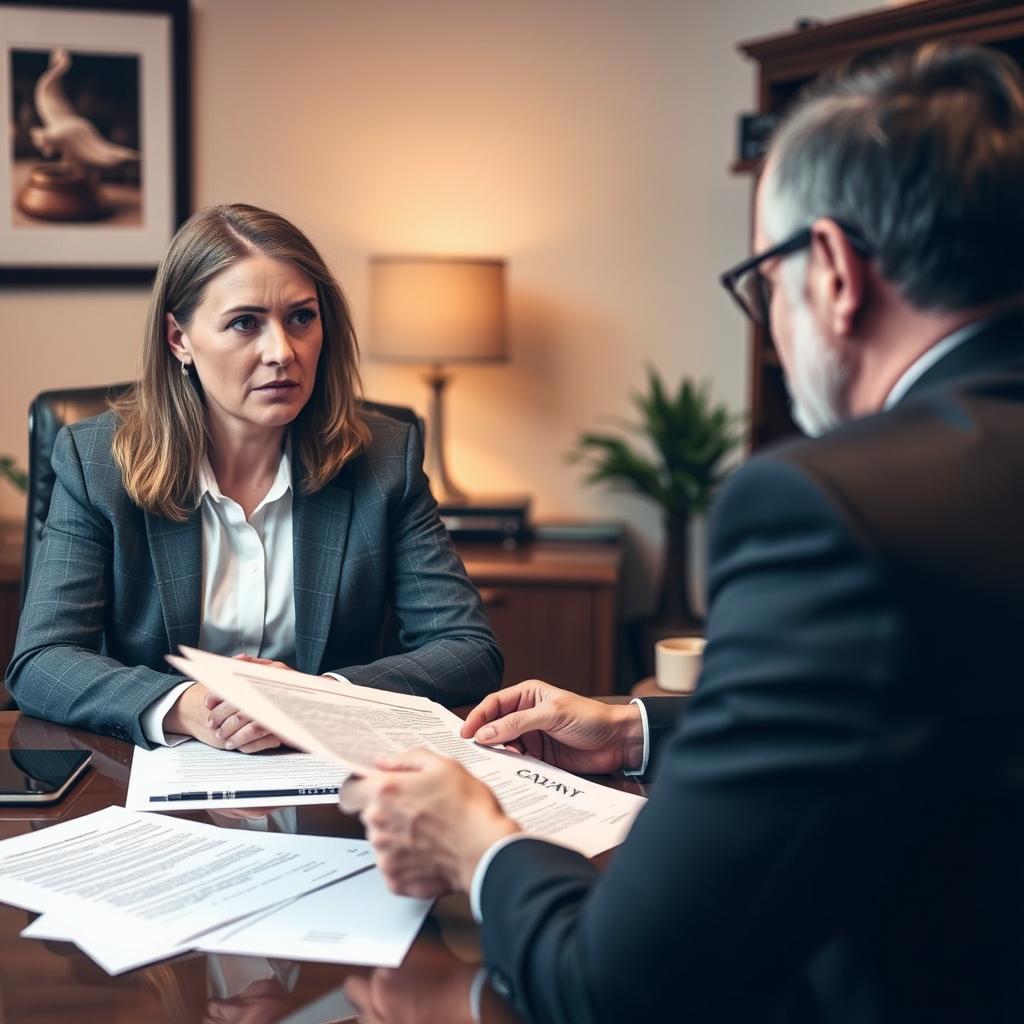
Rehabilitative Alimony Lawyer Arlington County, VA
Rehabilitative alimony is a form of spousal support designed to help a financially dependent spouse gain the education, training, or employment skills needed to become self‑sufficient. Under Virginia law, the Arlington County Circuit Court has authority to award rehabilitative support as part of a divorce or separate maintenance proceeding. The court examines the factors listed in Virginia Code § 20‑107.1, including the length of the marriage, each spouse’s earning capacity, and the time and expense required for the recipient to obtain employment. Mr. Sris and his Of Counsel team at Law Offices Of SRIS, P.C. represent spouses seeking rehabilitative alimony and those contesting an award throughout Arlington County. To discuss your situation, call (888) 437‑7747. Law Offices Of SRIS, P.C. — Advocacy Without Borders.
What Rehabilitative Alimony Means in Arlington County, Virginia
Virginia is an equitable distribution state, meaning marital assets are divided fairly — not necessarily equally — upon divorce. Spousal support is a separate issue, and rehabilitative alimony occupies a distinct role. Unlike permanent or indefinite support, rehabilitative alimony is temporary assistance that allows a receiving spouse to re‑enter the workforce or enhance their earning ability. The Arlington County Circuit Court, located at 1425 N. Courthouse Rd, Suite 2400, Arlington, VA 22201, handles all divorce and support matters. The court weighs the 13 statutory factors under Va. Code § 20‑107.1, including the standard of living established during the marriage, the duration of the marriage, and the contributions of each spouse to the family’s well‑being. Mr. Sris and his Of Counsel are familiar with how Arlington County judges apply these factors and can help frame a request — or a defense — that addresses the specific financial realities of your case.
Rehabilitative alimony may be appropriate when one spouse left the workforce to care for children or support the other spouse’s career. The court will look at the receiving spouse’s need for education or training, the likely time it will take, and whether sufficient resources are available without unduly burdening the paying spouse. Because each marriage is unique, the outcome depends heavily on the evidence presented. An experienced attorney can help gather documentation of income, expenses, and vocational limitations, and present a clear picture of what support is necessary to achieve self‑sufficiency. At Law Offices Of SRIS, P.C., we guide clients through this process, from initial financial disclosure to final hearing.
How Mr. Sris and His Of Counsel Handle Rehabilitative Alimony Cases
Mr. Sris and his Of Counsel begin by evaluating the factual and legal landscape of your situation. They review financial records, marital history, and any existing settlement agreements. When representing the requesting spouse, the team works to establish the need for support, the cost and timeline of the necessary education or training, and the paying spouse’s ability to provide assistance without undue hardship. For the spouse contesting rehabilitative alimony, the focus shifts to demonstrating that the request is unwarranted — perhaps because the sought‑after training is unnecessary, the timeline is inflated, or the paying spouse lacks the financial capacity to fund the support while meeting their own obligations.
Negotiation is often the first step. Many rehabilitative alimony disputes resolve through a separation agreement or a negotiated pendente lite order. If a settlement cannot be reached, the matter proceeds to a hearing before the Arlington County Circuit Court. Mr. Sris and his Of Counsel prepare thoroughly, working with vocational attorneys, accountants, and other professionals when the facts warrant it. They present evidence of the parties’ financial standings, the realistic costs of retraining, and the probable income the recipient can achieve once rehabilitated. Throughout the process, the firm keeps clients informed and helps them make decisions that protect their long‑term interests.
About Mr. Sris and His Of Counsel Team
Mr. Sris, Owner and Founder of Law Offices Of SRIS, P.C., has practiced law since 1997. A former prosecutor, he brings a thorough understanding of courtroom dynamics to every family law matter. He is admitted in Virginia, Maryland, the District of Columbia, New Jersey, and New York. Mr. Sris testified before the Virginia House Courts of Justice Committee in support of 2019 HB 635 (chief patron Del. David Bulova). His practice concentrates on complex family law issues, including contested spousal support and equitable distribution.
Mr. Sris works alongside a team of Of Counsel attorneys who contribute extensive experience across multiple practice areas. Collectively, Mr. Sris and his Of Counsel bring over 120 years of combined legal experience and have documented over 4,739 firm-wide results. Results may vary. The firm represents clients throughout Arlington County, Crystal City, Rosslyn, Clarendon, Ballston, Pentagon City, Shirlington, and the surrounding region. By‑appointment consultations are available; call (888) 437‑7747 to schedule.
Frequently Asked Questions
What is rehabilitative alimony in Virginia?
Rehabilitative alimony is temporary spousal support intended to help a financially dependent spouse obtain the education, training, or work experience necessary to become self‑supporting. The court evaluates 13 factors under Va. Code § 20‑107.1, including each spouse’s earning capacity, the length of the marriage, and the contributions of each party. A specific plan for rehabilitation must be presented and supported by evidence.
How does the court decide whether to award rehabilitative alimony in Arlington County?
The Arlington County Circuit Court weighs the statutory factors to determine whether a spouse needs support, the amount, and the duration. The requesting spouse must show a realistic path to self‑sufficiency — for example, enrollment in a degree or certificate program, a vocational training plan, or a defined period of job‑seeking support. The court also considers the paying spouse’s ability to meet the obligation without undue financial strain.
How long does rehabilitative alimony last?
The duration is based on the time reasonably needed to complete the educational or training plan and find employment. The court may set a fixed end date or retain authority to extend support if circumstances change. If the recipient fails to pursue the plan in good faith, the paying spouse may move to terminate the support. The timeline varies by the specific facts of each case.
Can rehabilitative alimony be modified after it is ordered?
Yes, a court may modify rehabilitative alimony if a material change in circumstances occurs. This might include a substantial change in either party’s income, a job loss, or a failure to follow the rehabilitation plan. A party seeking modification must file a motion and present evidence to the Arlington County Circuit Court. Legal guidance is important because the standard for modification is high and procedural deadlines apply.
Do I need a lawyer for a rehabilitative alimony case in Arlington County?
You are not required to have a lawyer, but the legal and financial stakes are significant. An experienced attorney can help gather evidence, present a well‑supported plan, and protect your interests in negotiation or at trial. Mr. Sris and his Of Counsel have handled spousal support matters in Arlington County for many years and can explain the likely range of outcomes based on your facts.
How do I schedule a consultation about rehabilitative alimony?
Call (888) 437‑7747 to speak with Law Offices Of SRIS, P.C. The firm offers consultations by appointment at its Arlington location. During the initial call, you can discuss your situation and learn how Mr. Sris and his Of Counsel may be able to assist with your rehabilitative alimony matter.
For nearby family law representation, visit our pages for Fairfax County Family Law Lawyer, Prince William County Family Law Lawyer, Stafford County Family Law Lawyer, Fauquier County Family Law Lawyer, and Loudoun County Family Law Lawyer.
For authoritative information on Virginia spousal support law, consult the Virginia Code § 20‑107.1, the Arlington County Circuit Court, and the Virginia Judicial System.
Attorney advertising. Prior results do not guarantee a similar outcome.
Case results depend on a variety of factors unique to each case.