
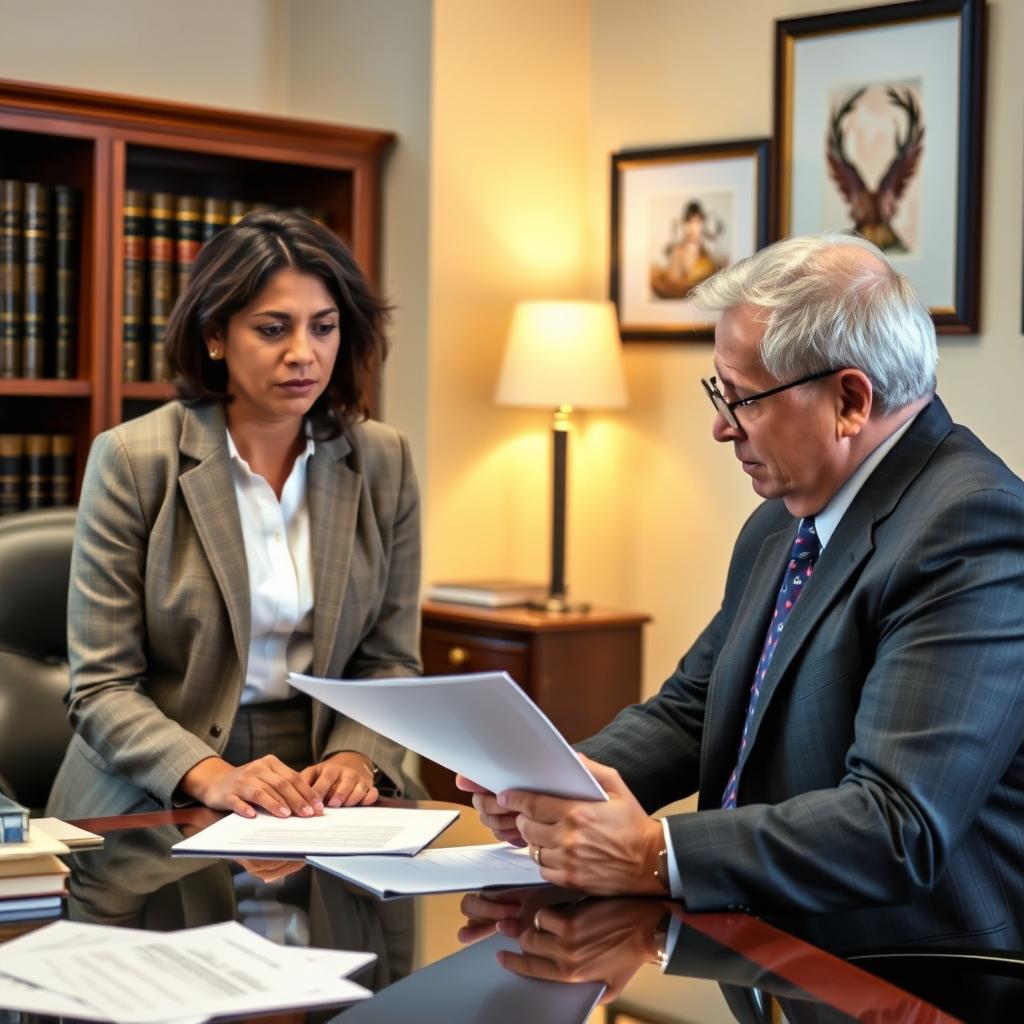
Visitation Modification Lawyer Arlington County, VA
Visitation orders in Arlington County are not immutable. When a parent’s circumstances change, a modification of the existing visitation schedule may become necessary. The Arlington County Juvenile and Domestic Relations District Court addresses standalone visitation disputes, applying Virginia’s best‑interests standard under Va. Code § 20‑124.3. Arlington’s urban environment—proximity to Washington, D.C., demanding commuter schedules, and frequent relocations—often drives modification petitions. Whether you seek more parenting time or oppose a change that could unsettle your child’s routine, experienced counsel can frame the request within the statutory factors. Mr. Sris, Owner and Founder of Law Offices Of SRIS, P.C., has handled family law matters across Virginia since 1997. Together with his Of Counsel, he brings thorough preparation and courtroom experience to each Arlington County visitation modification case. To schedule a consultation, call (888) 437‑7747. Law Offices Of SRIS, P.C. — Advocacy Without Borders.
What Visitation Modification Means in Arlington County
Virginia courts decide visitation by evaluating the child’s best interests under ten statutory factors. Once an order is entered, it remains in force until a party demonstrates a material change in circumstances and shows that the proposed modification would serve the child’s welfare. In Arlington County, standalone visitation matters are heard by the Juvenile and Domestic Relations District Court, located at 1425 N. Courthouse Rd, Arlington, VA 22201. If the visitation issue arises within a divorce action, the Arlington County Circuit Court retains jurisdiction over the modification alongside other divorce‑related matters.
The “material change” requirement can be satisfied by a parent’s relocation, a significant shift in the child’s needs, a demonstrated unwillingness to follow the existing schedule, or concerns about a parent’s ability to provide a safe environment. Arlington’s transient professional population makes relocation a common catalyst for modification requests. The court weighs continuity and stability heavily, so a parent seeking to alter an established pattern must present clear evidence that the change is necessary. Mr. Sris and his Of Counsel work with clients to assemble school records, communications logs, and witness testimony that speak directly to the statutory factors. Because the J&DR Court handles high‑volume dockets, effective advocacy requires a focused presentation that respects the court’s schedule while thoroughly advocating for the child’s interests.
How Mr. Sris and His Of Counsel Handle Visitation Modification Cases
Every visitation modification proceeding begins with a careful review of the existing order and the facts that have changed since its entry. Mr. Sris and his Of Counsel evaluate whether the change rises to the level of a material circumstance and whether the proposed new schedule truly serves the child’s well‑being. Where possible, the firm pursues negotiation with the other parent, aiming for a written agreement that avoids contested litigation. Many Arlington County families successfully resolve modification disputes through counsel‑assisted negotiation before a hearing is necessary.
When agreement is not possible, the matter proceeds to a hearing. Preparation focuses on the ten best‑interests factors and the specific reasons for the requested change. The firm’s approach emphasizes clear, evidence‑based advocacy: client testimony, school and medical records, and, when appropriate, testimony from a Guardian ad litem or other neutral professional. Mr. Sris’s background as a former prosecutor gives him a practiced command of courtroom procedure and cross‑examination, while his Of Counsel team contributes extensive experience across the full range of Virginia family law practice. Every representation is grounded in the understanding that visitation disputes are fundamentally about the child’s stability, and the firm works to achieve a resolution that minimizes conflict and supports the child’s relationship with both parents.
About Mr. Sris and His Of Counsel Team
Mr. Sris is Owner and Founder of Law Offices Of SRIS, P.C., a multi‑state firm practicing since 1997. A former prosecutor, Mr. Sris draws on more than two decades of trial experience to handle complex family law matters, including contested visitation modifications. His legislative contributions include testifying before the Virginia House Courts of Justice Committee in support of 2019 HB 635 (chief patron Del. David Bulova). The firm’s Of Counsel team—attorneys engaged through Excella—brings diverse perspectives and deep familiarity with Virginia’s equitable‑distribution system and custody‑visitation framework. Together, Mr. Sris and his Of Counsel bring over 120 years of combined legal experience, with 4,739+ documented firm-wide results. Results may vary.
Frequently Asked Questions
What legal standard do Virginia courts use for visitation modification?
Virginia courts modify an existing visitation order when the party requesting the change demonstrates a material change in circumstances and shows that the proposed modification serves the child’s best interests. The ten factors under Va. Code § 20‑124.3 guide the court: the child’s age and condition, each parent’s health, the existing parent‑child relationships, the child’s needs, each parent’s role in the child’s life, each parent’s willingness to support the other’s relationship with the child, and any history of abuse. In Arlington County, the Juvenile and Domestic Relations District Court applies this standard for standalone visitation cases; the Circuit Court applies it when visitation is embedded in a divorce proceeding.
How do I request a modification of visitation in Arlington County?
You file a petition to modify visitation with the Arlington County Juvenile and Domestic Relations District Court, or with the Circuit Court if the original order was entered in a divorce case. The petition must describe the existing order, identify the specific changes in circumstances since that order, and explain how the proposed schedule better serves the child’s interests. The other parent receives notice and an opportunity to respond. The court may schedule a hearing, order a mediation session, or appoint a Guardian ad litem to represent the child’s interests. Mr. Sris and his Of Counsel can prepare the petition, gather supporting evidence, and represent you through each stage of the process.
Can a parent lose visitation rights in Virginia?
Visitation is considered a right of the child, not solely of the parent, so a court may restrict or suspend visitation if it finds that continued contact would seriously endanger the child’s physical or emotional health. Common grounds include evidence of abuse, neglect, substance abuse that impairs parenting, or a persistent refusal to comply with court orders. Even in those circumstances, the court often imposes supervised visitation before completely terminating parental contact. A parent seeking to limit or suspend the other parent’s visitation must present clear and convincing evidence of the risk. Because these proceedings can be legally and emotionally intense, experienced representation is important.
Do I need a lawyer for a visitation modification in Arlington County?
While self‑representation is legally permitted, visitation modification involves procedural rules and evidentiary burdens that can be difficult to navigate without counsel. A lawyer can identify the strong $1s, marshal evidence, and present a focused case within the limited time the court allows. An experienced attorney also understands the local practices of the Arlington County J&DR Court and can negotiate with the other parent or their counsel. Law Offices Of SRIS, P.C. provides representation through every phase of the modification process. To discuss your situation, call (888) 437‑7747.
What factors does the Arlington County J&DR Court consider most when modifying visitation?
The court weighs all ten statutory factors, but certain considerations tend to carry significant weight in Arlington’s fast‑paced, commuter‑oriented community: the child’s age, each parent’s availability given work schedules, the distance between households, and the stability of the child’s current routine. The court looks closely at whether a proposed change disrupts school, extracurricular activities, or the child’s peer network. A parent seeking longer‑distance visitation after a relocation must show that a meaningful relationship can be maintained despite geographic obstacles. Mr. Sris and his Of Counsel help clients frame their request in terms that resonate with the court’s emphasis on stability and continuity.
How long does a visitation modification case take in Arlington County?
Timelines vary based on court scheduling, the complexity of the issues, and whether the parties are able to reach an agreement. An uncontested modification by agreement can be finalized relatively quickly once the paperwork is submitted. Contested cases require a hearing, and the J&DR Court sets its docket according to judicial availability. If expert testimony or a Guardian ad litem investigation is ordered, additional time is needed. Mr. Sris and his Of Counsel work to move the case forward efficiently while ensuring that all necessary evidence is developed. To discuss your specific timeline, contact Law Offices Of SRIS, P.C. at (888) 437‑7747.
Additional family law resources: Family Law Lawyer in Fairfax County, VA · Family Law Lawyer in Prince William County, VA · Family Law Lawyer in Loudoun County, VA
Primary legal authorities: Virginia Code Title 20 (Domestic Relations) · Virginia Judicial System · Virginia Circuit Courts
Attorney advertising. Prior results do not guarantee a similar outcome. Results may vary.
Case results depend on a variety of factors unique to each case.